Parco Molentargius-Saline: what to see and how to plan your visit
Parco Molentargius: discovering a unique ecosystem just minutes from Cagliari
The Parco Naturale Regionale Molentargius Saline represents one of the most valuable wetland areas in the Mediterranean basin, an authentic natural heritage site characterised by unique environments and extraordinary biodiversity. Visiting the park is an enjoyable and accessible experience thanks to the presence of numerous cycling and walking trails, which allow visitors to explore the landscape of the salt pans and lagoons in a slow and sustainable way.
The Parco Naturale Regionale Molentargius Saline represents one of the most valuable wetland areas of the Mediterranean basin, an authentic natural heritage site characterised by unique environments and extraordinary biodiversity. Its visit is made pleasant and accessible thanks to the presence of numerous cycling and walking trails, which allow visitors to explore the landscape of the salt pans and lagoons in a slow and sustainable way.
The Parco Naturale Regionale Molentargius-Saline, established in 1999, represents one of the most precious environmental treasures of Sardinia, as well as one of the most important wetland areas of the entire Mediterranean basin. Located in proximity to Cagliari, between the municipalities of Quartu Sant’Elena, Selargius and Quartucciu, this extraordinary ecosystem extends over more than 1,600 hectares and offers a unique landscape where nature, history and traditions intertwine surprisingly.
What makes Parco Molentargius so special is, in fact, its ability to contain very different environments within a relatively limited space. The large saltwater areas coexist with freshwater lagoons, reed beds, marsh areas and the historic salt pans, which for centuries have been one of the main economic activities of the area. This mosaic of habitats creates ideal conditions for the survival of numerous animal and plant species, transforming the park into a true sanctuary of biodiversity.
The history of the territory is closely linked to salt production, practised since the Phoenician-Punic period and developed over the following centuries up to the contemporary era. The salt pans themselves have been shaped and have shaped the landscape, contributing to the creation of a unique environment of its kind, today protected and enhanced as a natural heritage site of extraordinary interest. Walking along the park’s paths, it is still possible to observe canals, evaporation ponds and structures that testify to the industrial past of the area. The name itself, Molentargius, derives from the Sardinian word molenti, referring to the typical small donkey once used to pull carts loaded with salt.
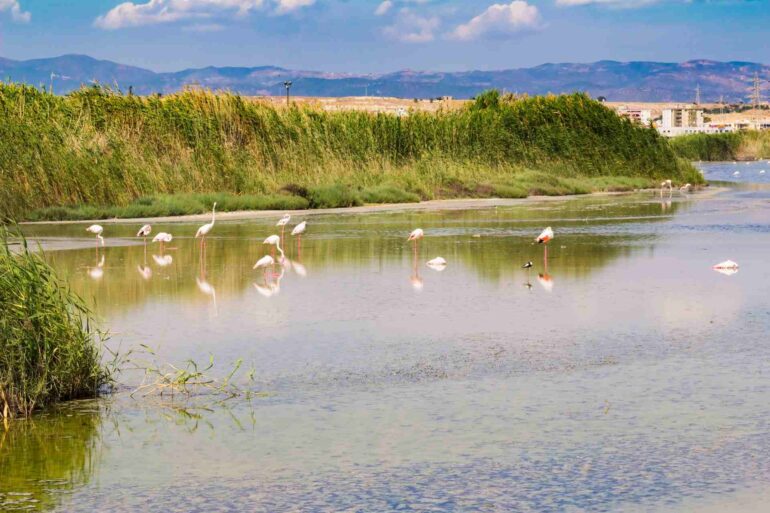
The park also boasts the presence of numerous species of waterbirds, including cormorants, great egrets, purple herons, marsh harriers, little terns and river nightingales, many of which use the park as a stopover area during migrations between Africa and Europe. Among these are also the iconic pink flamingos (in Sardinian Sa Genti Arrubia) that inhabit the Stagno di Molentargius, which have become the symbol of this protected environment and are part of one of the most important nesting colonies in Europe. This is a phenomenon that attracts birdwatching enthusiasts, nature photographers and visitors curious to witness the spectacle of thousands of specimens populating the lagoons every year.
All of this makes Parco Molentargius-Saline an ideal destination for an excursion into the uncontaminated nature of Sardinia, for those who love sustainable tourism and outdoor activities.
Organising a visit to Parco Molentargius-Saline: some useful tips
Organising a visit to Parco Molentargius-Saline requires good planning, because it is a very large and complex natural area, where the elements of interest are not concentrated in a single point but distributed throughout the entire system of lagoons, salt pans and cycling and walking paths. The park develops as a complex ecological network that connects different environments, each with its own characteristics and different levels of accessibility.
The first strategic choice concerns the entrance from which to begin the exploration. The Cagliari side is generally the most convenient and frequented, thanks to its proximity to the city centre and the presence of direct connections with the cycle paths that cross the area up to the city beach, Poetto Beach. From here, it is possible to quickly reach some of the most iconic areas of the park, such as the Stagno di Molentargius, where pink flamingos and other species of waterbirds are often observed. However, precisely because of its accessibility, this area tends to be more crowded, especially on weekends and during tourist periods.
The entrances located towards Quartu Sant’Elena, Selargius and Quartucciu instead offer a quieter and more immersive experience. In these areas, the context is less urban and more silent, ideal for those who wish to dedicate themselves to wildlife observation or simply experience the park at a slower pace. Here, the paths often develop among reed beds, stretches of water and less frequented areas, where it is easier to perceive the natural and wild dimension of Parco Molentargius-Saline.
The visit to the park requires at least half a day, but for a more complete and in-depth experience, it may also be necessary to dedicate an entire day. The choice of visiting time also significantly affects the experience. The first hours of the morning and late afternoon are the best moments, both for the more favourable climatic conditions and for the greater activity of the animals. In any case, it is essential to respect the rhythms of the place, avoiding haste and noise and maintaining a discreet attitude that allows visitors to fully experience the internal harmony of the park.
Getting around Parco Molentargius-Saline
The Parco Naturale Regionale Molentargius-Saline is crossed by a network of freely accessible cycling and walking routes—five, to be precise (Percorso Saline, Percorso Garzetta – Menghixedda, Percorso Civetta – Cuccu Meu, Percorso Olivastro – Ollastru and Percorso Oleandro)—which connect the main areas of the lagoons, the ancient salt pans, the observation points and the urban entrances coming from Cagliari, Quartu Sant’Elena, Selargius and Quartucciu. This structure makes the park easy to explore, but at the same time, large enough to require some basic planning in order to move around efficiently.
The bicycle is undoubtedly one of the most effective ways to explore this great variety of natural environments. It allows visitors to cover relatively long distances in a short time, easily connecting the different lagoon areas and reaching even the most distant entrances. Walking, on the other hand, offers a completely different experience, slower and more immersive. The walking trails allow visitors to get closer and pay greater attention to the details of the landscape, perhaps spending time observing the pink flamingos or stopping at the birdwatching hides.
A solution that is often recommended is to combine the two options. Using a bicycle to cover longer distances and then continuing on foot in the most interesting areas allows visitors to see a larger portion of the park without losing the quality of the natural observation experience. There are also five guided birdwatching routes (Isolotto Cagliari, Isolotto Quartu, Bellarosa Minore, Ecosistema Filtro and Perdalonga), available only by reservation, which allow close observation of flamingos and the other bird species that inhabit the area.
At certain times of the year, Parco Molentargius also offers the opportunity to take part in guided tours, which represent an important added value, especially for those visiting the area for the first time. Expert guides can help visitors read and understand the landscape, explain the history of the ancient salt pans and illustrate how the ecosystem works, making the connection between the natural environment and the human activities that have shaped the territory over the centuries clearer.
Forte Village: the ideal starting point for exploring the Parco Naturale Regionale Molentargius-Saline and Southern Sardinia
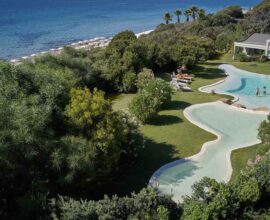
An ideal starting point for those who wish to visit Parco Molentargius-Saline and, at the same time, discover some of the most interesting locations in Southern Sardinia is the prestigious Forte Village in Santa Margherita di Pula, a true excellence in the world of Sardinian hospitality, capable of combining elegance, comfort and a privileged location just a short distance from the area’s most beautiful beaches and from some of the island’s most important historical and natural sites.
Among these are not only Molentargius, but also the picturesque village of Carloforte, Porto Flavia, one of the most unique architectural wonders of the Italian peninsula, Barumini and Su Nuraxi, among the island’s most fascinating Nuragic sites and, last but not least, the ancient city of Nora and the archaeological park of Pula. Forte Village therefore fits perfectly into a dynamic travel concept, in which the stay is not only accommodation in a property, but also a starting point for discovering the surrounding territory in depth.
Completing the experience is a wide range of services designed to promote the well-being of both mind and body, including the thalassotherapy programmes offered by Acquaforte Thalasso & Spa, individual and group lessons at the more than twenty sports academies hosted within the over 50 hectares of greenery surrounding the Resort, and the unforgettable gastronomic experiences offered by the wide selection of Michelin-starred and gourmet restaurants located within the property.
For further information or to book a stay at Forte Village, you can call +39 070 9218818 or write to holiday@fortevillage.com.
Would you like to discover the wonders of Parco Molentargius-Saline and enjoy a dream holiday in an authentic paradise? Discover Forte Village Resort in Sardinia