Recipes with salicornia from Sardinia: the perfect balance of flavor and freshness
Recipes with salicornia: bringing the taste of the sea to the table
Versatile, flavorful, and pleasantly crunchy, Sardinian salicornia lends itself naturally to a wide range of recipes with salicornia, from seafood appetizers to more elaborate first courses.
In recent years, Mediterranean cuisine has experienced a renewed appreciation for simple, seasonal, and locally rooted ingredients—raw materials capable of expressing both flavor and identity without the need for complex techniques. Within this context, salicornia has found increasing space, becoming a valued ingredient in everyday cooking as well as in more contemporary gastronomic interpretations.
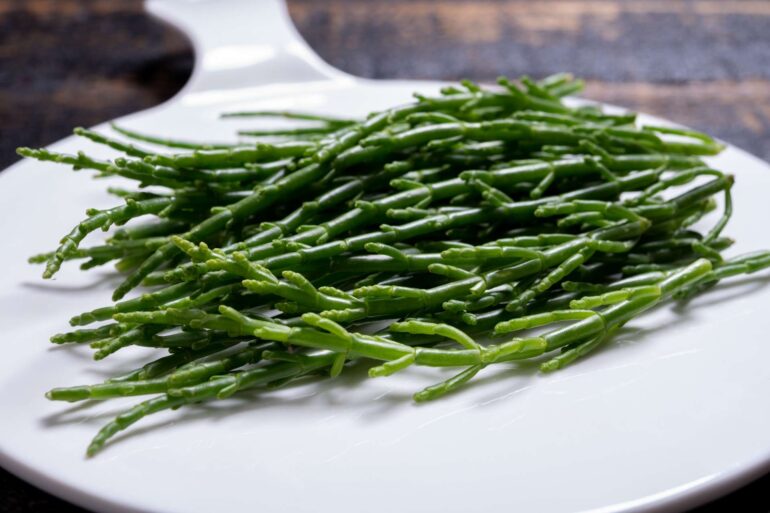
Also known as sea asparagus, this succulent plant grows naturally in brackish wetlands and along the coastlines of Sardinia, absorbing minerals and marine salts that define its distinctive flavor profile. Crisp, fresh, and naturally savory, it is an extremely versatile ingredient, ideal for enhancing light, well-balanced dishes, especially those based on fish, vegetables, and grains.
Thanks to these qualities, recipes with salicornia are characterized by their simplicity and lightness. Salicornia can be used raw in salads, briefly blanched as a side dish, sautéed to season pasta and risotto, or incorporated as a contrasting element in more structured dishes, allowing the plant’s natural flavor to guide the balance of the plate.
In Sardinia, this ingredient thrives not only from a natural perspective but also from a cultural and gastronomic one. Deeply connected to the sea and to seasonality, Sardinian cuisine has integrated salicornia into both traditional preparations and modern interpretations, now featured even in the menus of high-end restaurants.
Salicornia: characteristics, seasonality, and culinary uses
Salicornia is a halophytic plant belonging to the Amaranthaceae family, distinguished by its ability to grow in environments with high salt concentrations, such as coastal lagoons, brackish ponds, and wetlands subject to periodic marine infiltration—conditions common along the Sardinian coast. From a morphological standpoint, the plant features segmented, fleshy stems and lacks true leaves, an adaptation that limits water loss and allows mineral salts to accumulate within its tissues.
This succulent structure plays a fundamental role in salicornia’s adaptation to extreme environmental conditions, enabling the plant to tolerate salinity levels that would inhibit most other plant species. The internal tissues, rich in water and minerals, give salicornia its characteristic crunch and juiciness, qualities that are directly reflected in its sensory profile.
From a phenological perspective, salicornia is an annual species with a growing cycle concentrated mainly between spring and summer. During this period, the plant reaches its peak chlorophyll content, maintaining a bright green color and a compact structure. As the season progresses toward maturity, the stems may develop reddish hues due to the accumulation of anthocyanin pigments—an indication of physiological changes that also influence flavor. Using salicornia during its peak phase means working with an ingredient that is more vibrant, aromatically balanced, and structurally intact.
At the same time, salicornia’s flavor is closely linked to its growing environment. Its ability to absorb and concentrate sodium, magnesium, and potassium results in a pronounced yet balanced natural salinity, accompanied by fresh vegetal notes. This composition makes salicornia particularly interesting from a culinary perspective, as it allows dishes to be flavorful while reducing the need for added salt.
The firm texture of the stems, which remains crunchy even after brief heat treatments, allows salicornia to be used both raw and after quick blanching or sautéing, while maintaining excellent structural stability.
Tips for cleaning, blanching, and preparing salicornia
Before using salicornia in the kitchen, special attention should be given to its cleaning, as the plant grows spontaneously in coastal and brackish environments, often in direct contact with sand, sediments, and organic residues. The plant should be rinsed several times under cold running water, gently separating the stems to allow the water to remove any grains of sand trapped between the joints.
During this process, it is advisable to remove tougher or yellowed parts, usually located at the base of the stem, which may become fibrous once cooked. Prolonged soaking should be avoided, as it may cause the loss of mineral salts responsible for salicornia’s distinctive flavor.
Many recipes with salicornia call for blanching, which helps slightly soften the plant’s structure and balance its flavor, especially when salicornia is used as a main ingredient or paired with delicately flavored foods. To do this, simply bring a pot of unsalted water to a boil, immerse the salicornia for one to three minutes (depending on stem size and desired texture), and drain immediately. After blanching, it is recommended to transfer the salicornia to a bowl of cold or ice water. This step stops the cooking process, preserves its bright green color, and maintains its characteristic crunch.
Once cleaned and, if necessary, blanched, salicornia can be further prepared according to the recipe: quickly sautéed with extra virgin olive oil, used to season pasta and risotto, or incorporated into seafood dishes to add texture and natural salinity.
Recipes with salicornia: from appetizers to main courses
Thanks to its crunch, natural saltiness, and versatility, salicornia can be the star of recipes ranging from light appetizers to more structured main courses. Below is a selection of recipes with salicornia designed to make the most of its qualities.
Salicornia Salad with Cherry Tomatoes and Extra Virgin Olive Oil
A fresh, light appetizer that combines the crunch of salicornia with the sweetness of cherry tomatoes, enhancing the plant’s natural salinity without overpowering its flavor.
- Ingredients (serves 4):
- 250 g fresh salicornia
- 200 g cherry tomatoes
- 3 tablespoons extra virgin olive oil
- Freshly ground black pepper
- Optional: lemon juice
- Preparation:
- Clean the salicornia thoroughly, removing any tough parts and rinsing under cold water.
- Blanch in boiling water for 2 minutes, then immediately cool in ice water to preserve color and crunch.
- Cut the cherry tomatoes in half and combine them with the salicornia in a bowl.
- Season with extra virgin olive oil, black pepper, and a drizzle of lemon juice if desired.
- Gently toss and serve as a fresh appetizer or side dish.
Tip: this salad is also excellent with shaved Parmesan or toasted pine nuts for added flavor.
Salicornia with Citrus and Fennel
A balanced summer salad in which salicornia meets fennel and citrus, creating a contrast between the plant’s saline notes and the freshness of citrus fruits.
- Ingredients (serves 4):
- 200 g fresh salicornia
- 1 medium fennel bulb
- 1 orange and 1 grapefruit
- 2 tablespoons extra virgin olive oil
- Salt and pepper to taste
- Preparation:
- Clean and blanch the salicornia as described above.
- Thinly slice the fennel and segment the orange and grapefruit, cutting them into bite-sized pieces.
- Combine salicornia, fennel, and citrus in a bowl.
- Dress with olive oil, a pinch of salt, and freshly ground black pepper.
- Let rest for 5 minutes before serving to allow the flavors to blend.
Tip: for extra crunch, add lightly toasted walnuts or almonds.
Crostini with Fresh Ricotta and Salicornia
A simple and quick idea for appetizers or aperitifs: toasted bread, creamy ricotta, and lightly blanched salicornia create a perfect balance between creaminess and crunch.
- Ingredients (serves 4):
- 150 g salicornia
- 150 g fresh ricotta
- 8 slices rustic bread
- Extra virgin olive oil, to taste
- Black pepper, to taste
- Preparation:
- Clean and blanch the salicornia, then roughly chop it.
- Toast the bread slices until evenly golden.
- Spread ricotta on each slice and top with salicornia.
- Finish with a drizzle of olive oil and freshly ground black pepper.
- Serve immediately as an appetizer or finger food.
Pasta with Salicornia and Shrimp
A delicate seafood first course where the sweetness of shrimp pairs beautifully with the natural salinity of salicornia, resulting in a light yet characterful dish.
- Ingredients (serves 4):
- 320 g short pasta (penne, fusilli, or spaghetti)
- 250 g peeled shrimp
- 200 g fresh salicornia
- 3 tablespoons extra virgin olive oil
- 1 garlic clove
- Zest of 1 lemon
- Salt and pepper, to taste
- Preparation:
- Clean and blanch the salicornia for 2 minutes, then cool immediately.
- In a pan, heat the olive oil and sauté the garlic until lightly golden.
- Add the shrimp and cook for 3–4 minutes.
- Add the salicornia and sauté for another 1–2 minutes, adjusting seasoning.
- Cook the pasta al dente, drain, and toss with the sauce, finishing with lemon zest.
- Serve hot, optionally garnished with finely chopped parsley.
Risotto with Salicornia
An elegant and refined dish in which salicornia adds a balanced marine note to the risotto, while maintaining freshness and crunch.
- Ingredients (serves 4):
- 320 g Carnaroli rice
- 200 g salicornia
- 1 liter vegetable broth
- 1 shallot, finely chopped
- 40 g butter or 3 tablespoons extra virgin olive oil
- 50 g grated Parmesan cheese
- Salt and pepper, to taste
- Preparation:
- Clean and blanch the salicornia, then cut into pieces.
- Sauté the shallot in butter or olive oil in a saucepan.
- Add the rice and toast for 2 minutes.
- Gradually add hot broth, stirring constantly.
- Halfway through cooking, add the salicornia and continue until the rice is cooked.
- Stir in Parmesan, adjust seasoning, and serve hot.
White Fish Fillets with Sautéed Salicornia
A simple yet elegant main course: delicate fish fillets served with freshly sautéed, crunchy salicornia for a perfect balance between sea flavors.
- Ingredients (serves 4):
- 4 sea bass or sea bream fillets
- 200 g fresh salicornia
- 2 tablespoons extra virgin olive oil
- 1 garlic clove
- Salt and pepper, to taste
- Preparation:
- Clean and blanch the salicornia for 2 minutes.
- Heat the olive oil in a pan, sauté the garlic, then add the salicornia and cook for 1–2 minutes.
- Cook the fish fillets in a non-stick pan for 3–4 minutes per side or steam until done.
- Serve the fish with the salicornia, finished with olive oil and freshly ground pepper.
Scrambled Eggs with Salicornia
A quick and flavorful recipe in which salicornia adds crunch and a subtle marine note to eggs, elevating simple ingredients into a satisfying dish.
- Ingredients (serves 2):
- 4 eggs
- 100 g salicornia
- 1 tablespoon butter or oil
- Salt and pepper, to taste
- Preparation:
- Clean and blanch the salicornia for 1–2 minutes.
- Melt the butter in a pan and lightly sauté the salicornia.
- Beat the eggs, pour them into the pan, and gently stir until creamy.
- Season and serve hot, optionally garnished with fresh herbs.
Baked Frittata with Salicornia and Fresh Herbs
A light and versatile preparation, perfect for breakfast, brunch, or summer lunches: salicornia, eggs, and aromatic herbs come together in a dish that balances flavor and lightness.
- Ingredients (serves 4):
- 6 eggs
- 150 g salicornia
- 2 tablespoons grated Parmesan
- Fresh herbs (parsley, thyme)
- Salt, pepper, and olive oil, to taste
- Preparation:
- Clean and blanch the salicornia, then cut into pieces.
- Whisk the eggs with Parmesan, salt, pepper, and herbs.
- Add the salicornia and mix well.
- Pour into a lightly oiled baking dish and bake at 180°C (350°F) for 15–20 minutes.
- Serve warm or cold, ideal for picnics or summer brunches.
These dishes are flavorful in their simplicity, quick and easy to prepare, yet capable of expressing the colors, flavors, and aromas of the island.
Flavours and aromas of Sardinia at Forte Village Resort
An ideal place to enjoy the delicacies of Sardinian cuisine is the Forte Village Resort in Santa Margherita di Pula, near Cagliari – a multi-award-winning five-star resort set within lush Mediterranean vegetation, just steps away from the crystal-clear waters of some of Southern Sardinia’s most beautiful beaches.
The resort is home to more than 21 gourmet and Michelin-starred restaurants, including the renowned Terrazza San Domenico led by Michelin-starred chef Massimiliano Mascia and Belvedere by Giuseppe Molaro, as well as 14 bars offering everything from local specialties to fusion cuisine, always with great attention to freshness, seasonality, and ingredient quality.
Among these, locally sourced ingredients such as the delicate Carciofo Spinoso di Sardegna DOP, aromatic local honey, Sardinian garlic, the island’s “red gold” saffron, and, of course, salicornia are celebrated in both traditional and innovative preparations.
For more information about Forte Village restaurants or to request a reservation at the resort, please call +39 070 9218818 or email holiday@fortevillage.com.
Would you like to discover the flavours of Sardinian cuisine and enjoy a fairytale holiday in an authentic paradise? Discover the Forte Village Resort in Sardinia.