Triathlon: Middle and Sprint Distances at Challenge Forte Village
Triathlon: Sprint and Middle distances headline the Challenge Forte Village
Triathlon: distances and program of the Challenge Forte Village in Santa Margherita di Pula, between swimming, cycling, and running on October 24 and 25, 2026.
A weekend dedicated to outdoor sports, fun, and competition awaits on October 24 and 25, 2026, when the stunning natural landscapes of Southern Sardinia will host the races of the Challenge Forte Village, one of Italy’s most anticipated triathlon competitions. After all, it is one of the most complete and stimulating endurance sports, primarily because it combines three distinct disciplines — swimming, cycling, and running — into a single event that requires the development of a solid balance between physical endurance, technique, and mental strategy.
Each athlete must learn to manage energy distribution, handle transitions between different sports with speed and efficiency, and adapt to unpredictable variables such as terrain conditions, weather, and course characteristics. At the same time, the distances of each triathlon competition define not only its length, but also the type of training required, the strategies that can help win each race, and the profile of the athletes each format is designed for.
In other words, the ability to plan becomes just as important as physical preparation. There are shorter and more intense distances, such as the Sprint, as well as longer and more demanding ones, such as the Middle (also known as Half Distance), both of which will take center stage during the two Sardinian race days. The Olympic triathlon — consisting of 1.5 km of swimming, 40 km of cycling, and 10 km of running — represents an intermediate option, allowing athletes to challenge themselves both physically and mentally. Understanding these differences allows for targeted preparation and a more conscious race experience, maximizing both performance and enjoyment.
Triathlon distances: what are the differences between Sprint, Middle, and Olympic?
From the fast-paced Sprint triathlon (750 meters of swimming, 20 km of cycling, and 5 km of running), designed for those who want to approach the discipline without tackling long distances, to the more demanding Middle Distance (1.9 km of swimming, 90 km of cycling, and a final half marathon of 21.1 km), and including the Olympic triathlon (1.5 km of swimming, 40 km of cycling, and 10 km of running), the official Olympic competition format since 2000, the various triathlon distances offer different race experiences and training approaches. Here are the main differences.
Sprint triathlon: a competition where speed and technique matter
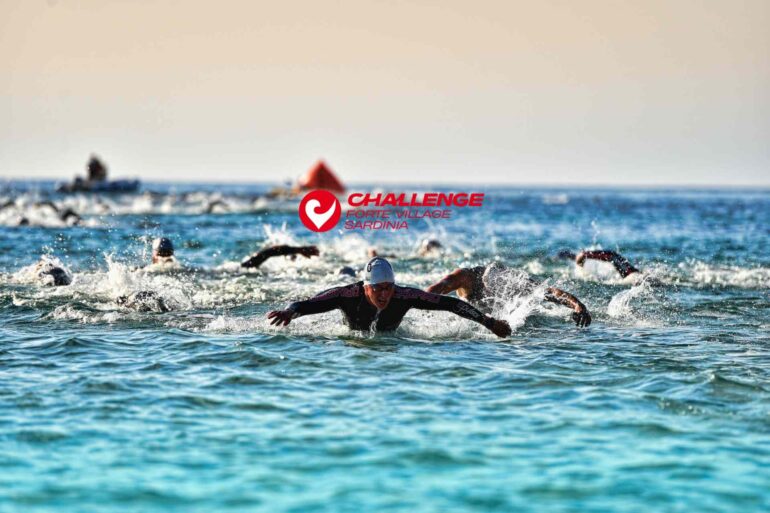
The sprint triathlon represents the ideal entry point for those who want to try triathlon without facing excessive distances, while still maintaining a high level of intensity. The swimming segment, covering 750 meters, takes place in open water and requires a solid mix of technique, endurance, and breath control. For the cycling portion, approximately 20 km, which generally unfolds on flat or slightly rolling roads, it is important to maintain a steady cadence and optimize energy outputs. The final 5 km run closes the race, challenging athletes to sustain a fast pace even after completing the previous two disciplines.
Training for the sprint distance, therefore, requires focusing on speed exercises and transition simulations to minimize downtime and maximize overall performance.
Middle triathlon: endurance and effort management
The Middle Distance, or Half Distance, represents a true endurance challenge, designed for those who want to test resistance, technique, and strategy over more demanding distances. This format includes 1.9 km of swimming, 90 km of cycling, and 21.1 km of running — a course that requires strong concentration, energy management, and the ability to approach each phase methodically.
Pacing and a solid technical foundation are essential for tackling the open water swim in order to conserve energy for the following stages. The 90 km cycling segment, which may include gentle climbs and flat sections, requires careful attention to cadence, power, and nutrition to reach the final run in the best possible condition. The concluding half-marathon becomes the true test of athletic preparation, and often it is determination and mental strength that determine final placement.
Training for the Middle Distance should therefore include long sessions of swimming, cycling, and running, as well as combined workouts (brick sessions) to simulate real race conditions. Testing nutrition and supplementation before, during, and after training is equally important, as is developing strategies to manage pacing and concentration — all key elements for completing the competition.
Olympic Triathlon: distances and recommended training approach
The Olympic triathlon represents a middle ground between the previous two formats, as it consists of 1.5 km of swimming, 40 km of cycling, and 10 km of running. This format is ideal for those seeking a longer challenge than the Sprint, without reaching the demands of the Middle Distance.
One aspect often underestimated in preparing for this type of race is the role of transitions, which in a distance like the Olympic can truly make a difference: quickly moving from swimming to cycling and from cycling to running, without losing focus, allows athletes to gain valuable time. Managing overall pace is also essential, as this distance does not allow for major mistakes: starting too fast or mismanaging energy can significantly impact final performance.
Triathlon distances: Middle and Sprint at the highly anticipated Challenge Forte Village
Among the most renowned and anticipated sporting events in the international triathlon scene, a prominent place is undoubtedly held by the Challenge Forte Village Triathlon, which year after year sees participants from all over Europe compete in the beautiful location of Santa Margherita di Pula, just a short distance from some of the most stunning beaches in Southern Sardinia. More than just a competition, it is an experience that celebrates triathlon in its entirety, thanks to carefully designed courses that unfold in one of the most scenic corners of Italy, and a festive atmosphere that accompanies every stage of the race, from preparation to the finish line.
The 2026 edition of the event, scheduled for Saturday, October 24, and Sunday, October 25, will see the return of the middle and sprint distances, as well as the classic relay. The presence of multiple formats allows each athlete to choose the challenge best suited to their level of preparation and personal goals — because sport is not only competition, but also enjoyment and fun.
Registration fees vary depending on the period: until June 30, athletes can enter the individual Middle race with a fee of €315, while the relay costs €380, and the individual Sprint distance costs €95. Prices increase in subsequent registration windows, reaching up to €360 for the individual Middle, €430 for the relay, and €105 for the Sprint for those registering by October 15.
The experience is further enhanced by services dedicated to athletes and social moments planned at the end of the competition. The registration fee includes a post-race BBQ, also open to friends and family at a rate of €32 for adults and €16 for children. Athletes can also benefit from special rates for accommodation within the resort’s beautiful four- and five-star properties.
For more information about the Challenge Forte Village or to book a stay, you can call +39 070 9218818 or send an email to holiday@fortevillage.com.
Would you like to experience the excitement of a triathlon in a dream setting among sea, nature, and comfort? Discover Forte Village Resort in Sardinia