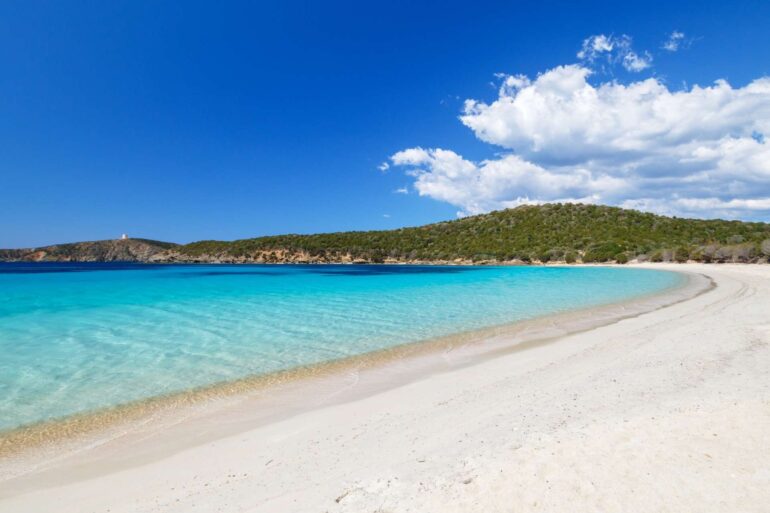
Beaches of Southern Sardinia: the 10 most beautiful ones to visit
Beaches of Southern Sardinia: the most beautiful ones to discover
The beaches of Southern Sardinia offer an extraordinary variety of landscapes, from wide sandy shores and secluded coves to crystal-clear waters and the scents of Mediterranean nature. A stretch of coastline that is ideal for those seeking relaxation, beauty, and authentic atmospheres.
Southern Sardinia is a unique place, where the beauty of the sea is expressed through an extraordinary variety of landscapes. Long stretches of fine, white sand, small coves sheltered by granite headlands, dunes covered with Mediterranean scrub and waters in countless shades of blue make this stretch of coastline an ideal destination for those looking for postcard-perfect scenery.
The charm of this part of the island is also confirmed by several important international rankings (and not only this area, as the whole of Sardinia can boast dream beaches). In summer 2026, Su Giudeu, in Chia, entered the Global Beach Index’s global top 20, ranking 19th among 226 beaches analyzed and located around the world. The assessment considered, among other elements, water quality, landscape, accessibility, climate, and visitor reviews. Tuerredda, located opposite the island of the same name, also received international recognition: in the 2026 ranking of Europe’s 50 best beaches drawn up by World’s 50 Best Beaches, it ranked 13th, confirming its position among the most highly regarded beach destinations in the Old Continent.
But which beaches in Southern Sardinia should not be missed? Here are ten places to include in an itinerary exploring the island’s southern coast.
Beaches in Southern Sardinia: 10 not to miss
The beaches of Southern Sardinia offer a succession of landscapes that are very different from one another: large stretches of light-colored sand, small coves surrounded by Mediterranean scrub, bays sheltered from the wind and stretches of coastline where the sea takes on every shade of turquoise and blue.
From Su Giudeu to Tuerredda, from Punta Molentis to Porto Giunco, passing through Cala Cipolla, Cala Pira, Cala Sinzias and Costa Rei, the island’s southern coastline offers a great variety of settings suitable for the whole family and for different needs, from those traveling with children to those who love snorkeling and, more generally, water sports, as well as those looking for high-quality services and outstanding dining options.
Here are the ten most beautiful and evocative: this is not a ranking, but a useful guide to discovering them and identifying those best suited to different ages and needs.
Su Giudeu: dunes, turquoise sea and unspoiled nature
Su Giudeu is one of the most spectacular and recognizable beaches in the southern part of the island. It is located along the coast of Chia, in the municipality of Domus de Maria, and immediately stands out for its wide beach of light, fine sand, framed by dunes and Mediterranean vegetation. The sea is characterized by clear waters and gently sloping seabeds, creating different shades of blue and turquoise.
A short distance from the shore lies the islet of Su Giudeu, which helps make the panorama even more striking and, when sea conditions allow, can also be reached by swimming. Behind the beach lies an equally interesting natural environment, with dunes, juniper trees and the Spartivento pond. It is therefore a particularly suitable destination for those looking for wide open spaces, shallow waters that are also suitable for young children, and good accessibility. It is also one of the beaches that should definitely be included in an itinerary dedicated to the Chia coastline. Its fame has now extended beyond the island, to the point that in 2026 the beach entered the Global Beach Index’s global top 20, reaching 19th place in the prestigious ranking.
Tuerredda: the bay with Caribbean colors
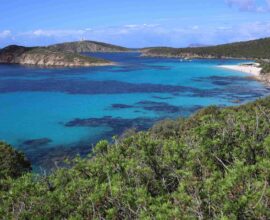
From Chia, you can continue along the southwestern coast towards Teulada, where one of the most famous beaches in the whole of Sardinia can be found: Tuerredda. The beach lies within a sheltered bay and features a shoreline of soft, light-colored sand overlooking exceptionally clear waters. The sea takes on shades ranging from emerald green to turquoise and blue, while the islet of Tuerredda lies just off the coast. The lush vegetation surrounding the shoreline contributes to giving the beach an almost tropical appearance.
Tuerredda is particularly popular with those who enjoy swimming, snorkeling, and relaxing in an unspoiled marine environment. Its popularity, however, means that during the high season it is one of the most frequented beaches in the area: for this reason, it is advisable to always check the applicable access arrangements. Its international reputation is confirmed by its inclusion in the 2026 ranking by World’s 50 Best Beaches, where Tuerredda ranked 13th among the best beaches in Europe.
Cala Cipolla: the small cove of Chia
Also along the Chia coastline, we find Cala Cipolla, a place capable of offering a completely different experience from the area’s large sandy beaches. The beach is a small inlet sheltered by two rocky headlands and surrounded by Mediterranean scrub. The light-colored sand contrasts with the rocks and the green vegetation, while the sea features transparent waters that are particularly suitable for those who enjoy observing marine life.
The sheltered shape of the bay creates a more intimate atmosphere compared to the larger beaches. It is therefore an interesting choice for those who prefer smaller coves and unspoiled natural landscapes, without giving up the beauty of the sea. Cala Cipolla is also an ideal stop for snorkeling enthusiasts: the clear waters and the presence of rocks along the edges of the cove make it easier to explore the seabed. Another advantage is its location. Its proximity to Su Giudeu and the other beaches of Chia makes it possible to organize an itinerary dedicated to this part of the coast, alternating larger, well-serviced beaches with smaller coves.
Punta Molentis: the symbol of Villasimius
Moving towards the southeastern part of the island, you reach Punta Molentis, one of the most representative beaches in the Villasimius area. The beach is located in the Capo Carbonara area and is characterized by a particularly scenic layout: a rocky granite headland divides the coastline, while Mediterranean vegetation frames the landscape, making it even more authentic and evocative.
The light-colored sand and transparent waters are the elements that attract visitors most, but Punta Molentis is especially captivating because of its overall landscape. From some elevated points, it is possible to admire the shape of the bay and the different shades of the sea. It is a beach suited to those looking for a panoramic and particularly photogenic location, as well as those wishing to explore the territory of the Capo Carbonara Marine Protected Area.
Precisely because it is one of the area’s best-known destinations, access may be subject to regulations during the summer months. Before setting out, it is therefore advisable to check the updated information relating to the current season.
Porto Giunco: between the sea and the lagoon
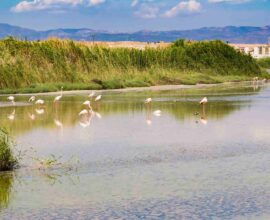
A short distance from Villasimius lies Porto Giunco, one of the best-known beaches on the southeastern coast. The beach is wide and characterized by fine, light-colored sand, while the sea features clear waters whose colors change according to depth. Nearby, there is also the Notteri pond, with its iconic pink flamingos, creating an interesting contrast between the marine and lagoon environments.
It is also one of the area’s most versatile beaches**:** it is suitable for those traveling with their families, those looking for services and conveniences, those who want to enjoy water activities, and those who simply wish to spend a relaxing day by the sea. Its proximity to Villasimius also makes it easy to combine a visit to the beach with exploring the town and the other bays in the area.
Cala Pira: a bay embraced by Mediterranean scrub
Between Villasimius and Costa Rei, in the municipality of Castiadas, lies Cala Pira. The beach is set within a landscape dominated by Mediterranean scrub and juniper trees, while the sea features clear waters and shallow seabeds. The setting is defined above all by the presence of the Cala Pira tower, a historic structure dominating the headland and creating a particularly evocative view that differs from the classic images of large white-sand beaches.
Cala Pira can be a good choice for those who want to combine time at the sea with walks, also exploring the surroundings of the bay. Its location also makes it perfect for an itinerary including Costa Rei, Cala Sinzias and the other beaches along the Castiadas coastline.
Cala Sinzias: wide open spaces and clear waters
Also in the municipality of Castiadas is Cala Sinzias, a long stretch of beach that is one of the most popular on the southeastern coast. Its appeal lies in a landscape characterized by a broad expanse of light-colored sand stretching along a considerable section of the coastline, accompanied by Mediterranean scrub. The sea is clear and features different shades of blue and green, while the seabed gradually slopes down from the shore.
Its size is another important strength. Compared with the smaller coves, Cala Sinzias offers greater safety and freedom of movement, making it particularly appealing to families, groups and travelers who wish to spend several hours by the sea. The beach also allows visitors to enjoy various activities, from simple swims to walks along the water’s edge, as well as water sports in the areas where the relevant services are available.
Costa Rei: kilometers of coastline to explore
Costa Rei deserves a separate mention, both for its beauty and for its distinctive topographical layout. The name does not refer to a single beach, but to a long stretch of coastline characterized by beaches, coves and various panoramic viewpoints. The coastline offers wide sandy spaces and a sea in a multitude of shades, while behind it stretches lush, typically Mediterranean vegetation. One of its main strengths is precisely its variety: you can spend your days on larger beaches or move towards more secluded bays.
Among the places to visit in the surrounding area are Cala Pira, Cala Sinzias and the area around the Scoglio di Peppino. This makes it possible to create a particularly rich itinerary without having to undertake excessively long journeys. Costa Rei is therefore especially suitable for those who want to explore several beaches over the course of several days, choosing the setting they prefer each time.
Poetto Beach: the sea just a stone’s throw from Cagliari
Poetto offers a completely different side of Southern Sardinia’s coastline. The vast beach stretches between Cagliari and Quartu Sant’Elena and represents the perfect meeting point between the sea and vibrant urban life. Here, the beach is complemented by beach establishments, restaurants, venues, sports activities, and services that make it possible to spend a day by the sea without giving up modern conveniences.
Its location is one of its main advantages. Those visiting the Sardinian capital can easily reach Poetto and alternate exploring the city with a few hours of relaxation on the coast. In other words, it is a particularly interesting destination for those looking for services, activities, and easy access, but also for those who want to enjoy an experience that differs from the wilder and more secluded bays in the south of the island.
The Scoglio di Peppino: one of the island’s most photographed views
Between Costa Rei and Santa Giusta lies one of the coastline’s most recognizable landscape features: the Scoglio di Peppino. The distinctive rock formation emerges from the sea in front of the beach and, when viewed from the shore, resembles the shape of a large turtle. It is precisely this characteristic shape that has made the rock one of the most photographed subjects along the coastline.
Around the rock formation lies a landscape of light-colored sand, transparent waters, and Mediterranean vegetation. When the sea is calm, the contrast between the color of the water and the rock creates a particularly evocative setting. The area is ideal for those who enjoy photography and walks in nature, as well as for those who want to include a different kind of stop in an itinerary dedicated to Costa Rei.
Forte Village Resort: the ideal starting point for discovering the beaches of Southern Sardinia
Forte Village Resort in Santa Margherita di Pula, on the southern coast of the island, represents a particularly interesting starting point for those who wish to explore the beaches of Southern Sardinia without giving up comfort, high-quality services and unparalleled hospitality. From here, it is possible to reach and visit the beaches along the Chia and Domus de Maria coast, such as Su Giudeu and Cala Cipolla, and continue along the coast towards Tuerredda and Teulada, creating a different itinerary each day among the sea, nature and Mediterranean landscapes.
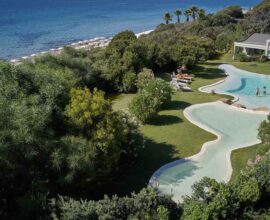
But Forte Village is not simply a base from which to explore the surrounding beaches. The resort is located directly on the sea and has a private beach, set within a natural environment of great beauty. Surrounded by approximately 50 hectares of gardens, it offers direct access to the sea, numerous swimming pools, restaurants, more than twenty sports academies, and even a state-of-the-art wellness center, Acquaforte Thalasso & Spa, renowned for its regenerating thalassotherapy programs.
For more information about Forte Village Resort or to book a stay, call +39 0709218818, or email holiday@fortevillage.com.
Would you like to discover the most beautiful beaches in Southern Sardinia and enjoy a dream holiday in a true paradise? Book your stay at the Forte Village Resort in Sardinia