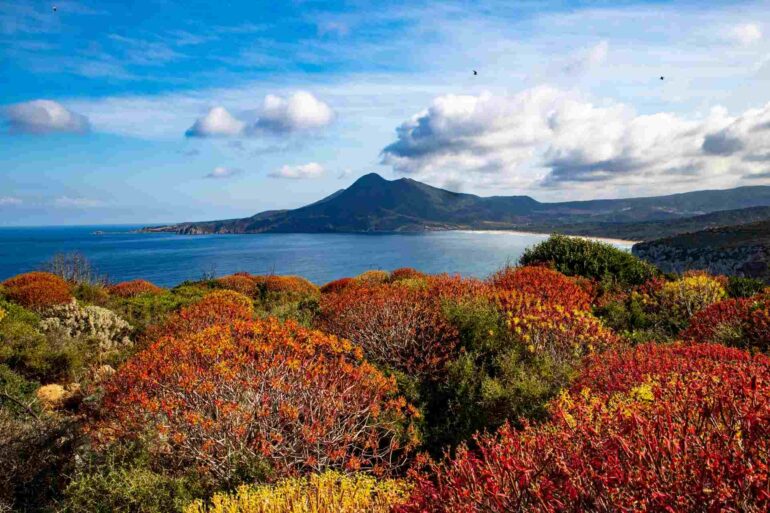
Autumn in Southern Sardinia: a journey through flavours, fragrances and traditions
Autumn in Southern Sardinia, among traditional flavours and places to discover
Autumn in Sardinia is the ideal time to discover the southern part of the island at a slower pace. From seaside walks and villages to archaeological sites and traditional flavours, the season invites you to explore the area and immerse yourself in its landscapes, culture and fragrances.
Autumn is an ideal season to discover Southern Sardinia from a different perspective, creating a journey that engages all the senses. There are the fragrances of the Mediterranean scrub, the countryside and citrus groves, as well as those of freshly baked Sardinian bread and kitchens where traditional recipes continue to be prepared using techniques handed down over time. There are the flavours of pecorino cheese, saffron, prickly artichokes and bottarga, together with wines and seafood specialities. And there are the traditions that tell the story of the deep relationship between local communities, the sea, the land and its cultivation.
From Cagliari to Sarrabus, from Pula to Sulcis, autumn offers the opportunity to go beyond the best-known image of summer Sardinia and connect with a region shaped by landscapes, ingredients, fragrances, crafts and local knowledge.
Southern Sardinia in autumn: sea, nature and villages
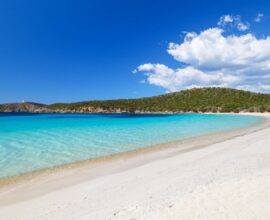
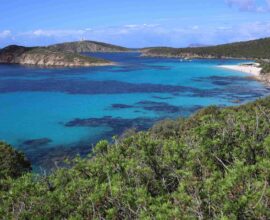
One of the reasons to choose autumn for a trip to Southern Sardinia is the opportunity to experience the area without focusing exclusively on its seaside dimension. The sea remains a defining feature of the landscape, but it becomes the starting point for exploring the inland areas, historic centres and archaeological heritage. Just a few kilometres from Cagliari, Pula combines the coastal landscape with a visit to the ancient city of Nora. Continuing eastwards, you come across Villasimius and the Capo Carbonara area, while the coastline leads towards Costa Rei, Muravera and Sarrabus, an area also known for its agricultural produce and citrus groves.
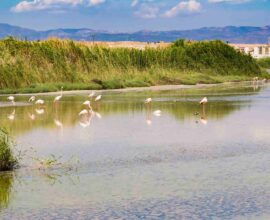
The Sardinian capital also deserves to be discovered at the more relaxed pace of autumn. The historic centre, harbour, historic neighbourhoods and markets offer an insight into the city’s everyday life, while the Molentargius-Saline Regional Natural Park provides the opportunity to observe pink flamingos in one of the area’s most distinctive natural environments. For those wishing to venture beyond the coast, Southern Sardinia also preserves important evidence of the island’s history. Barumini, with the Su Nuraxi nuragic complex, is one of the most significant destinations for discovering the Nuragic civilisation, as well as one of the island’s oldest monuments, while Iglesias offers the opportunity to discover the heritage linked to the area’s mining tradition.
Traditional flavours and fragrances: autumn at the table
Autumn is also a precious season for discovering Sardinia through its gastronomy. Island cuisine is rooted in its relationship with what the land provides and varies considerably from one area to another. In Southern Sardinia, the sea meets the agricultural and pastoral produce of the inland areas, creating a cuisine in which ingredients and recipes tell the story of local communities.
Among the most representative products of Sardinian gastronomy are pecorino cheese, spiny artichokes, saffron and bottarga, together with a wide variety of wines, including Carignano del Sulcis, Monica and Nuragus. Traditional pasta varieties are also a staple, from malloreddus to fregula, as are the many bread-based preparations that form part of the island’s food culture. However, flavours tell only part of this experience. The fragrances of Sardinia also arrive at the table: the scent of freshly prepared bread and pasta, officinal herbs, and the scent of sea salt in the air at dawn – these are fragrances that belong to everyday life and help make each area recognisable.
For this reason, a gastronomic journey through Southern Sardinia is not simply a journey through dishes and products: it is a way of discovering the history and identity of each place through what is produced, cooked and shared.
The value of local craftsmanship and traditional techniques
In Carloforte and on the island of San Pietro, gastronomic tradition also carries with it the history of the communities that have crossed the Mediterranean over the centuries. Here, tuna occupies a central place in local cuisine, while cascà is one of the most distinctive specialities of the Carloforte tradition. It is a dish made with steamed couscous from durum wheat semolina, dressed with a rich mix of pan-fried seasonal vegetables, lentils and other types of legumes.
But talking about traditions also means talking about people and practices. Recipes, processing techniques, cheese production, fishing and agricultural activities are part of a diverse heritage that continues to be passed down today. In Cagliari, one of the most important celebrations is the Feast of Sant’Efisio, which every year, between the end of April and the beginning of May, renews a deeply felt bond between the city, the saint and the villages crossed by the procession. In Iglesias, meanwhile, Holy Week preserves ancient rites and celebrations, characterised by processions and confraternities that transform the streets of the historic centre into a particularly evocative setting.
In Sulcis and along the southern coasts, tradition is also closely linked to the sea. In Carloforte, the culture of tuna fishing has left a profound mark on island life and its cuisine, keeping practices and knowledge associated with the mattanza alive, now part of the community’s memory and identity. Inland, meanwhile, the bond with pastoralism and the production of various dairy products remains strong, as does the connection with traditional crafts that use materials and techniques handed down over time.
Craftsmanship is also an important part of this heritage: from textile production to ceramics, from basketry to the creation of other objects linked to rural life, many forms of craftsmanship preserve shapes, motifs and techniques that have become part of that body of knowledge passed down through generations. These are different expressions of the same identity, which emerges in religious celebrations as well as in everyday activities, in family recipes as well as in traditional crafts.
Forte Village Resort, the ideal starting point for discovering Southern Sardinia
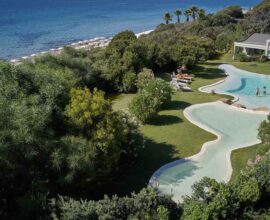
Few places can provide a perfect starting point for exploring Southern Sardinia in autumn, combining a seaside stay with excursions to discover the surrounding area. Among them is Forte Village, a five-star resort located in Santa Margherita di Pula, less than an hour’s drive from both Cagliari and Pula. Its strategic location makes it possible to organise a variety of itineraries along the island’s southern coast or towards the Sulcis area.
Furthermore, throughout the month, the renowned property offers a package designed to make the most of this magical time of year. The “October in Sardinia” package, valid from 1 October to 2 November, includes a 10% discount on the room rate, half-board accommodation with breakfast and dinner, a complimentary stay for children up to 16 years old sharing a room with adults, one Academy included for each child, and transfers to and from Cagliari Airport.
Among the sports academies participating in the initiative are those dedicated to tennis, padel, swimming, pickleball, go-karting and basketball. Substantial discounts are also available on the Real Madrid Foundation Clinic and on the Coastal Rowing and Mountain Bike Academies. The offer cannot be combined with other promotions.
For further information about the “October in Sardinia” package or to book a lesson at one of the Academies, please call +39 070 9218818 or email holiday@fortevillage.com.
Would you like to experience a dream holiday in a true paradise? Discover the Forte Village Resort in Sardinia