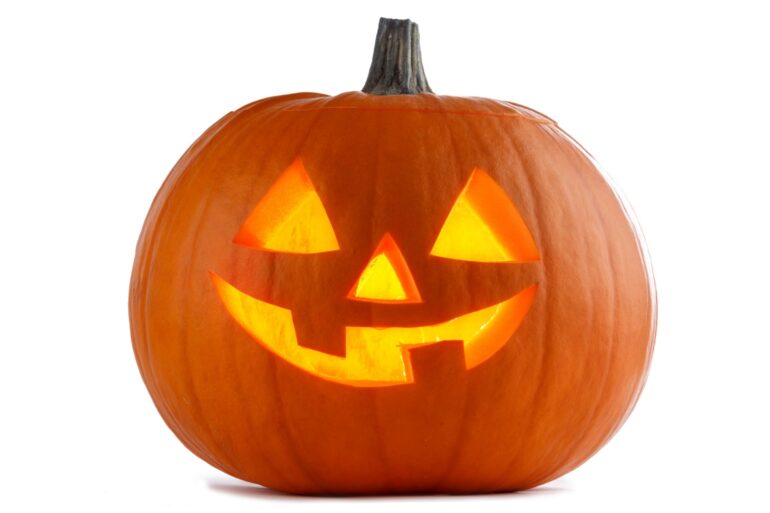
Halloween pumpkin: story of a symbol between folklore and mystery
Halloween pumpkin: a symbol combining ancient traditions, magic and legends
The Halloween pumpkin combines the mysterious atmosphere of ancient legends with the warmth of folk customs. Behind its carved smile there lies a story spanning centuries and cultures, transforming a simple vegetable into a universal icon of folklore and conviviality.
Every year, at the end of October, cities and towns worldwide transform by the warm and evocative glow of Halloween pumpkins, which fill squares, gardens, shop windows and doorways creating an atmosphere made of mixed playfulness, thrills and mystery.
Anyway, the apparent lightheartedness of contemporary celebrations with all the costumes, masks and laughter hides a much deeper background, rooted in ancient rites and beliefs. The origins of the Halloween pumpkin indeed date back to the celtic festivals related to the cycle of seasons, when people celebrated the subtle boundary between light and shadow, hence the time between harvest and soil’s rest. It was the time of year to honor the dead and bring gratitude to benevolent spirits, by lighting sacred fires to protect the community from the dangers of the upcoming winter.
In this symbolic context, the act of carving a Halloween pumpkin took on – and still retains – a ritual meaning: beyond creativity or decoration purposes, it began representing a way to give visible shape to the energy of transformation. Hollowing out, carving and lighting a flame in the pumpkin’s heart thus evoked an inner light illuminating the darkness, an ancient gesture that speaks about rebirth, protection and memory.
The history of the Halloween pumpkin, from celtic origins to modern traditions
The Halloween pumpkin’s history crosses centuries, cultures and continents, evolving from a simple vegetable to a universal symbol of the Night of the Dead and the light that illuminates the darkness all around. Its origins date back to ancient celtic peoples, who celebrated the transition from summer to winter in the season of Samhain, at the end of October, a time when nature entered into rest and human life confronted with a cycle of death and rebirth.
During Samhain, celts believed that the veil between the worlds of the living and the dead thinned, allowing souls to return again for one night, at least. To protect themselves from evil spirits and honor benevolent ones, people used to light up sacred fires and lanterns in front of their homes or along paths. These carved vegetables served to illuminate darkness, guide lost souls and define a symbolic boundary between the material and spiritual worlds. Each carving then represented an act of communication with the afterlife, a ritual aimed at transforming the fear of the night into protection and collective memory.
With the emigration from Ireland to America in the 19th century, the custom of carving pumpkins spread in the States due to its fascinating and practical characteristics: a large vegetable, easy to carve and eye-catching, capable of containing a more intense light. Thus began the myth of Jack O’Lantern, the most popular lantern carved from a pumpkin, which soon became the undisputed symbol of Halloween night everywhere.
The legend of Jack O’Lantern, a cunning blacksmith who tricked the devil and upon his death was welcomed neither into Heaven nor Hell, consolidated the symbolic significance of the lantern: the light inside represented all the wandering souls, but also protection, hope and the ability to deal with the unknown. This tale spread fast, transforming pumpkin into an object of pop cult and ritual storytelling, combining both fantasy and spirituality.
The Halloween pumpkin in Sardinia, bringer of light and protection
Parallel to international celebrations for Halloween, local traditions with surprising symbolic similarities arose even in Sardinia. Festivals such as Sa Conca e Mortu, Is Animeddas and Su Mortu Mortu featured the use of lanterns made from local fruits and vegetables, lit to guide the souls of the dead while protecting the living.
Some of these celebrations even involved children in asking for traditional treats or dried fruit to symbolically homage the souls of the dead, using the formula: seus benius po is animeddas, mi das fait po praxeri is animeddas, seu su mortu mortu, carki cosa po sas ànimas, peti cocone (translated as “Have you come for Is Animeddas? Can you give me something to offer to celebrate Is Animeddas or Su Mortu Mortu? Bring something for the souls, little kid”). A gesture that strengthened the sense of community and collective memory, surprisingly anticipating the contemporary “trick or treat” formula.
Sa Conca e Mortu: the lantern of the dead
During the festival of Sa Conca e Mortu (“the container of the dead”), celebrated mainly in sardinian hinterland, families prepared lanterns with local autumn fruits such as pumpkins or turnips. The process of preparation involved hollowing out and carving the pumpkin, to eventually decorate it with symbolic motifs or stylized skull-like faces, serving as true ritual object.
Once lit with a candle inside, it became a means of communication between the living and the dead: the light represented the path to follow for the souls and a protection from evil spirits. Placed in front of homes or along alleys, the lantern transformed a simple vegetable into a symbol of memory and continuity of life. This custom shows how, even in ancient times, the act of carving fruits and vegetables and lighting them with a candle inside had a profound spiritual and social significance, anticipating many of the features related to the actual modern Halloween pumpkin.
Is Animeddas: the night of souls
Although not strictly connected to Halloween pumpkins, Is Animeddas is another sardinian tradition that bears clear similarities to celebrations originating in celtic lands. Celebrated on the night between October 31 and November 1, the “feast of souls” represents a significant expression of sardinian culture about the cult of the dead. On this night, families would set tables rich in traditional foods and leave cupboards open so that the souls could symbolically collect food and feed.
Children, usuallydressed in ghostly masks, would roam the streets asking for sweets or dried fruit as an offer to the souls of the dead. But recently, modern pop customs have introduced candy and chocolate too. This tradition is reminiscent of modern-day “trick-or-treating”, but with a deeper meaning of memory and cult of the dead.
Su Mortu Mortu: the cult of the dead in Barbagia
In Barbagia, the festival of Su Mortu Mortu represents a moment of deep social and spiritual cohesion. During this celebration, communities used to light up fires to guide the souls of the dead and provide safety to the population from the dangers of the darkness. Carved pumpkins, known locally as “sa crocoriga” or “conca ‘e mortu”, were placed just outside homes or along the main town’s paths.
The act of carving and decorating Halloween pumpkins was therefore much more than a pure artistic gesture: it represented a ritual custom rich in symbolism, which strengthened social bonds, guaranteed protection and kept alive the memory of the beloved ones who passed away, emphasizing the importance of respecting the natural cycles of life and death.
In all these Sardinian festivities the common thread is light, which illuminates the darkness, guides the wandering souls, protects the living from any evil on this spooky night. Pumpkin, thanks to its round shape and the ability to transform into a beautiful lantern, becomes a true icon of transformation, protection and continuity. This fusion of ritual symbolism and pop culture highlights how the act of carving Halloween pumpkins, with all its uses for both decoration and protection purposes, has universal roots spanning over different times and continents, but while taking on specific local forms and meanings yet.
Do you want to experience a fairytale holiday in an authentic paradise? Discover Forte Village Resort in Sardinia