Chinese cuisine: flavors and recipes that are winning over the Mediterranean
Chinese cuisine: a journey through flavours, aromas and traditions
Chinese cuisine is one of the world’s oldest and most influential culinary traditions, with a history spanning thousands of years, shaped by flavours, techniques and customs. Able to evolve without losing its identity, it is now appreciated across every continent and is increasingly engaging in a dialogue with Mediterranean gastronomic culture.
In recent years, interest in Chinese cuisine has grown significantly, driven above all by an increasing curiosity about distant culinary cultures and the search for ever more refined gastronomic experiences. More and more people are looking beyond the great classics of Oriental cuisine to discover the richness of the country’s diverse regional traditions, each distinguished by its own ingredients, preparation techniques and flavour profiles.
Chinese cuisine is not, in fact, a single culinary tradition, but rather a universe composed of numerous local identities. From the bold, spicy and intensely aromatic flavours of Sichuan cuisine to the elegance of Cantonese cooking, and on to the specialities of Northern China, where fresh pasta, dumplings, bao buns and noodles play a central role, every region offers its own unique culinary story. Added to these are the traditions of the coastal regions, where fish and seafood take centre stage, and those of the inland areas, where spices, slow cooking methods and richer ingredients define dishes with a distinctive character. It is an extraordinarily diverse gastronomic heritage, capable of surprising even the most discerning palates and transforming every meal into a journey of discovery through the culture of this Asian nation.
The Mediterranean, too, has embraced and reinterpreted this culinary tradition, creating a fascinating dialogue between East and West. The meeting of premium ingredients—such as fresh fish, seasonal vegetables and local produce—with traditional Oriental techniques has given rise to new gastronomic experiences that preserve the identity of Chinese cuisine while engaging with new ingredients and contemporary culinary sensibilities. This cultural exchange allows Chinese dishes to be enjoyed in a refined, contemporary interpretation that is increasingly appreciated by lovers of gourmet cuisine.
Chinese cuisine: origins, traditions and defining characteristics
Chinese cuisine traces its roots back more than four thousand years, during which customs, cooking techniques and ingredients evolved alongside the succession of dynasties and the development of the country’s many regions. More than simply a collection of recipes, it represents a true cultural expression, deeply connected to Chinese philosophy and to the concept of harmony between humanity, nature and food.
Since ancient times, food has been regarded as one of the fundamental elements of personal well-being. Traditional Chinese medicine attributes specific properties to many foods and encourages balancing “hot” and “cold” ingredients, flavours and cooking methods to promote the body’s equilibrium. Although these beliefs now coexist with an increasingly modern and international cuisine, they continue to influence many traditional recipes.
Moreover, in Chinese culture, food is not merely nourishment, but also a symbol of togetherness, prosperity and good fortune. Major celebrations, such as Chinese New Year and the Mid-Autumn Festival (Zhōngqiūjié, also known as the Moon Festival), are accompanied by recipes rich in symbolic meaning: dumplings, for example, resemble ancient gold ingots and are associated with prosperity, while noodles symbolise longevity and are traditionally eaten during celebrations and birthdays as a wish for a long and prosperous life.
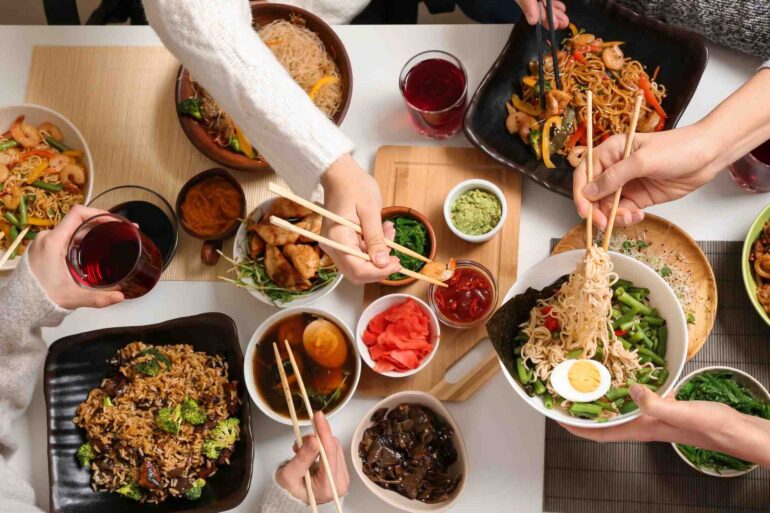
The way meals are enjoyed also reflects this philosophy. Dishes are generally placed at the centre of the table and shared among all diners, creating a convivial experience in which everyone can sample a variety of preparations. This custom embodies one of the most important principles of Chinese culture: the meal is a moment of togetherness, conversation and sharing, as well as an opportunity to celebrate the richness of Chinese cuisine.
Chinese dishes: the pursuit of harmony in taste, form and flavour
One of the most fascinating aspects of Chinese cuisine is its constant pursuit of harmony. Every dish is created through the combination of flavours, colours, aromas and textures, with the aim of achieving complete balance. Sweet, salty, sour, bitter, spicy and umami coexist within the same dish without any single flavour overpowering the others, offering a rich and multi-layered tasting experience. Visual presentation is equally important: the interplay of vibrant colours and diverse ingredients makes every course pleasing not only to the palate but also to the eye.
Preparation techniques are another defining feature of this culinary tradition. The wok, a symbol of Oriental gastronomy, allows ingredients to be cooked quickly at high temperatures while preserving their texture, colour and nutritional value. Alongside stir-frying, steaming enhances the natural flavour of ingredients, while braising, stewing, marinating, quick frying and grilling are each chosen according to the characteristics of the ingredients and the desired final result.
Another hallmark of Chinese cuisine is the meticulous attention paid to cutting ingredients. Meat, fish and vegetables are often cut into bite-sized pieces before cooking to ensure shorter preparation times, even cooking and greater convenience when eaten with chopsticks. This detail further demonstrates how every stage of preparation is carefully designed to achieve balance, practicality and the enhancement of premium ingredients.
Chinese cuisine: the eight great culinary traditions of China
The extraordinary regional diversity of China is one of the elements that makes its cuisine so unique. The so-called Eight Great Culinary Traditions (Sichuan, Canton (Guangdong), Shandong, Jiangsu, Zhejiang, Fujian, Hunan and Anhui) are profoundly different from one another, shaped by climate, geographical features, local agriculture and the availability of ingredients.
Sichuan cuisine is renowned for its skilful use of chilli peppers and the distinctive Sichuan peppercorn, which creates a pleasant, mildly numbing sensation on the palate. Cantonese cuisine, by contrast, favours careful preparations, exceptionally fresh ingredients and light cooking methods, while Shandong cuisine is celebrated for its rich broths and abundant use of seafood. The culinary traditions of Jiangsu and Zhejiang stand out for their elegance and refinement, with recipes characterised by balanced flavours and meticulous presentation. Hunan cuisine is known for its bold and spicy dishes, while Fujian and Anhui make extensive use of ingredients sourced from mountains and forests, including mushrooms, aromatic herbs and freshwater and seafood products.
This extraordinary diversity makes Chinese cuisine one of the richest and most fascinating in the world. Every region preserves its own traditions, recipes and techniques, yet they all share the same fundamental values: respect for ingredients, the pursuit of balance and a deep appreciation for the convivial dining experience. It is a gastronomic heritage that continues to evolve, and that still inspires chefs, food enthusiasts and restaurants around the world, encouraging an ever-closer dialogue between the East and international culinary cultures.
Chinese food: traditional ingredients and signature dishes
The essential ingredients vary according to the different geographical areas of the country, but certain elements are found in countless traditional recipes. Rice is one of China’s symbolic staple foods, particularly in the southern regions where the climate is especially favourable for its cultivation. It is consumed daily in many different forms: boiled, stir-fried in a wok, served as the base for accompanying dishes or transformed into more elaborate preparations.
In Northern China, where climatic conditions are more suitable for growing wheat, flour-based foods play a central role, including noodles, dumplings, flatbreads and steamed dough preparations. This contrast between North and South reflects how closely Chinese gastronomy is connected to local geography and the resources available in each region.
Among the most commonly used ingredients are fresh vegetables, mushrooms, bean sprouts, tofu, meat, fish and shellfish. Vegetables are often quickly stir-fried in a wok to preserve their crispness and vibrant colour, while tofu and soy-based products represent an important component of the culinary tradition thanks to their versatility and nutritional value.
Seasonings and aromatics also play a fundamental role in defining the character of every dish. Soy sauce is one of the best-known ingredients and is widely used to add savouriness and depth of flavour. It is complemented by sesame oil, fresh ginger, garlic, spring onions, rice vinegar, chilli peppers and regional spice blends, all of which contribute to creating highly distinctive aromatic profiles.
The most iconic Chinese dishes of the country’s culinary tradition
Among the best-known and most appreciated Chinese dishes worldwide are recipes that have become true icons of Oriental gastronomy. Behind each preparation, however, lies a rich history, precise techniques and local traditions that deserve to be discovered.
Chinese dumplings are undoubtedly among the most representative symbols of the country’s cuisine. Known by different names depending on their preparation, they can be steamed, boiled or pan-fried. Fillings range from pork and prawns to vegetarian versions featuring vegetables and tofu. Beyond their gastronomic value, dumplings also hold great cultural significance: their shape resembles ancient gold ingots, which is why they are traditionally eaten at the beginning of the Lunar New Year as a symbol of prosperity and good fortune. Another great classic is Peking duck, one of the most celebrated recipes of imperial Chinese cuisine. Its preparation requires both time and precision: the skin is rendered thin and exceptionally crispy through a meticulous process, while the meat remains tender and richly flavoured. Traditionally, it is served with delicate pancakes, fresh vegetables and sweet bean sauce, creating a perfect balance of textures and aromas.
Fried rice is one of the most widespread dishes in everyday Chinese cooking. Created as a simple recipe to make use of leftover rice, it has evolved into a versatile dish enjoyed throughout the world. It can be enriched with eggs, prawns, chicken, vegetables or meat, while cooking in a wok gives it its distinctive texture, with well-separated, fragrant ingredients. Noodles also occupy a central place in popular Chinese gastronomy. They can be prepared in countless variations: stir-fried with vegetables and meat, served in broth, accompanied by spicy sauces or enriched with fish and shellfish. In many parts of China, they symbolise longevity and are traditionally eaten during special occasions because of their auspicious meaning.
Among the regional specialities worthy of particular attention are Gong Bao Chicken, a signature dish of Sichuan cuisine characterised by the combination of chilli peppers, peanuts and intensely aromatic flavours, and Cantonese dim sum, an assortment of bite-sized delicacies including dumplings, spring rolls and other small dishes traditionally served during tea time.
Contemporary Chinese cuisine at Forte Village Resort: the flavours of the East meet the Mediterranean summer
Contemporary gourmet Chinese cuisine has found its place in one of the many restaurants at Forte Village Resort in Santa Margherita di Pula, less than an hour’s drive from Cagliari, offering guests a culinary experience that combines the refinement of Oriental tradition with the elegance and quality of Mediterranean hospitality.
Set within an exclusive environment surrounded by the natural beauty of Sardinia, the resort offers an international gastronomic journey through no fewer than 21 Michelin-starred and gourmet restaurants, where different culinary traditions are reinterpreted using carefully selected ingredients, refined techniques and exceptional attention to service. The true added value of this prestigious destination lies in its ability to transform every dining experience into a journey of discovery through distant cultures and flavours.
The contemporary Chinese cuisine on offer draws inspiration from the great regional culinary traditions of China, showcasing their most representative dishes through elegant presentation and a meticulous selection of ingredients. The recipes embrace the hallmark techniques of Oriental gastronomy—such as steaming, wok cooking and the skilful use of spices, aromatic herbs and traditional sauces—while reinterpreting them with a more modern and refined approach. At the same time, the influence of the Mediterranean region represents one of the most compelling aspects of this culinary experience, giving rise to dishes that preserve a recognisable Chinese identity while appealing to the international tastes of the resort’s guests.
For more information about the restaurants located within the Resort, or to plan your stay at Forte Village, please call +39 0709218818 or email holiday@fortevillage.com.
Would you like to discover the very best of international cuisine while enjoying a dream holiday in a true paradise? DiscoverForte VillageResort in Sardinia