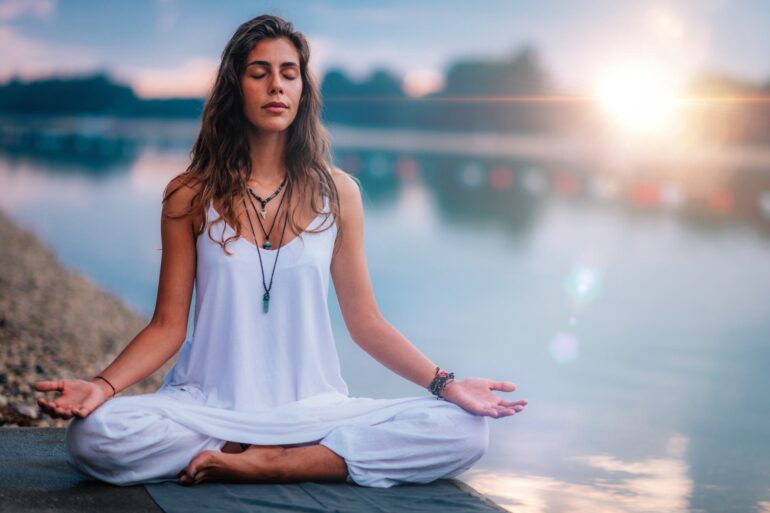
Mindfulness, the meaning and benefits: how to practice it and reduce stress
Mindfulness: meaning and effective ways to oppose stress and anxiety
Mindfulness practice helps develop a conscious relationship with one’s own thoughts, emotions and physical sensations, promoting the ability to manage stressful situations with calm and clarity. Over time, this approach strengthens one’s psychophysical well-being and fosters a more harmonious relationship with oneself and the world around.
In today’s increasingly fast-paced lifestyle, characterized by constant commitments and exposure to digital stimuli, the mind often finds itself distracted by worries, obligations and recurring thoughts that might be source for stress, anxiety and an unpleasant feeling of dissatisfaction. Practicing mindfulness represents an effective and real response, offering concrete means to reconnect with the present, develop self-awareness and establish a lasting balance between body and mind.
Mindfulness is not just a momentary relaxation technique, but a discipline that promotes a state of active presence, that positively impact mental and physical well-being, interpersonal relationships and the overall quality of daily life. Adopting the practice of mindfulness means learning to observe one’s own thoughts, emotions and bodily sensations without judgment, welcoming what comes in the present with openness and curiosity.
This allows one to interrupt the constant flow of stimuli and automatic reactions, promoting instead greater mastery of emotions, improved concentration and reduced stress. It’s no surprise, then, that more and more scientific studies confirm that mindfulness can positively affect nervous system, hormonal balance, sleep quality and even cardiovascular health.
So, here’s how to approach the mindfulness practice and some tips for applying it effectively and easily in your everyday life.
What is mindfulness and what psychophysical benefits
Mindfulness, now widely recognized and explored in Western culture, is a form of mindful, intentional and non-judgmental meditation that encourages to live in the present moment with openness and fullness. It entails curiously observing what happens in mind, body and through emotions, welcoming each experience without attempting to change or repress it.
It’s not about eliminating thoughts, negative emotions or daily difficulties, but rather about developing the ability to detach and accept while observing, which allows to acknowledge the inner personal status without being overwhelmed by them, promoting greater control over automatic reactions and a deeper self-understanding.
Many scientific studies confirm that regular mindfulness practice can positively modulate the nervous system, reduce cortisol levels, increase the production of neurotransmitters related to well-being and influence brain function, increasing neuralplasticity and improving cognitive function, sustained attention and memory.
In short, mindfulness is not a mere meditation technique, but a true lifestyle that transforms daily experiences and promotes profound harmony between mind, body and emotions.
How to practice the mindfulness meditation
Practicing mindfulness means learning to create an inner space where the mind can observe its contents without judgment, thus cultivating greater awareness of mental processes and bodily signals, improving the ability to respond to situations with clarity and serenity.
This mindful attention, when practiced regularly, has been shown to significantly reduce stress levels, promote deep relaxation, increase the ability to focus and foster a stable and lasting emotional balance. It also impacts positively physical well-being, regulating blood pressure and heart rate and also reducing muscle tension and anxiety-related discomfort.
The practice of mindfulness is therefore not limited to formal sitting meditation sessions: it can integrate into any daily activity, transforming ordinary action like walking, breathing, eating, even washing dishes into moments of full awareness, where one learns to perceive sensory details and emotions with greater intensity and attention.
This approach fosters a deeper connection with oneself and the surrounding environment, allowing to face life with greater resilience and stress management skills, while improving the quality of relationships, creativity, mental clarity and an overall sense of well-being.
7 principles defining mindfulness meditation
The seven pillars of mindfulness meditation practice represent the core principles that guide the contemplative experience and constitute the foundation to develop the ability to observe the present with openness, clarity, emotional stability, thus shaping a favorable environment for deeper and more lasting psychophysical wellness.
These pillars, introduced by Jon Kabat-Zinn as part of his program MBSR (Mindfulness-Based Stress Reduction), should be understood as attitudes to cultivate over time through constant observation of one’s experience, helping to gradually transform the way oneself relates to thoughts, body and emotions.
1. Non-judgment
The first – perhaps best-known – pillar invites to suspend the automatic tendency to label every experience as “good” or “bad”, allowing mind to open with greater clarity and neutrality to what is present, without following impulsive reactions that just fuel tension, stress or a sense of confusion.
2. Patience
It represents the ability to respect the natural pace of one’s internal process, following the idea that every transformation requires enough time and that forcing mind to reach a certain state produces the opposite effect indeed, increasing frustration.
3. Beginner’s mind
This attitude invites to look at each moment with a fresh gaze, without any imposing past expectations, habits or thought patterns on the present, to rediscover the freshness of living the present and opening to broader and deeper perceptive possibilities.
4. Trust
Cultivating trust means developing a more harmonious relationship with oneself, relying on individual intuition and body as guides, overcoming the concept that inner balance must come from external sources or rational logic.
5. Not seeking results (or Non-striving)
Mindfulness is not a technique oriented towards performance or immediate improvement; it is instead based on the willingness to simply be present, welcoming experience as it comes, without pursuing any particular goals or states. Paradoxically, it is precisely this lack of effort that generates profound, lasting benefits.
6. Acceptance
This doesn’t imply resignation, but rather acknowledging what is happening within and around oneself without impulsively attempting to change it, thus creating a space for greater mental freedom and conscious response, and notimpulsive reactions.
7. Letting go
This encourages to not hold onto thoughts, emotions or expectations that come from habit or fear, fostering instead a sense of psychological lightness that allows mind to regain balance and fluidity.
Taken together, these seven principles constitute the backbone of the mindfulness practice and invite to transform the experience of relating with present moment into a continuous process of openness, awareness and kindness towards oneself.
Mindfulness exercises to foster awareness and wellness
Among the most useful exercises to approach mindfulness, a series of formal and informal practices that aim at cultivating conscious and stable attention, rooted in the present, and able to observe internal and external experiences with an attitude of openness, curiosity and non-judgment.
These practices, while different in their implementation, share the goal of training mind to interrupt that autopilot-mode that often guides thoughts and emotional reactions, while promoting greater psychological self-regulation and a clearer perception of body sensations.
These are the most popular exercises, both in formal meditation and in daily practice, which can be gradually integrated even by those approaching mindfulness for the first time.
1. Breath Awareness
One of the simplest yet deepest exercises involves bringing attention to the natural flow of breath, observing air entering and leaving the body without altering its cadence. When mind wanders, as usually happens, it simply takes to notice the distraction and gently bring the attention back to breathing, thus training concentration, inner calm and mental presence.
2. Body Scan
This is a guided exercise that brings attention to different parts of the body, usually starting from the feet and moving up to the head, with the aim of detecting tension and discomfort without judging them, or trying to change them. This practice increases body awareness, reduces stress and promotes profound psychophysical relaxation.
3. Walking Meditation
Every step becomes a conscious act: it takes to observe the contact of feet with the ground, the movement of legs, the pace of the body in space. This form of meditation is particularly useful for who finds it difficult to sit for long periods and allows to bring mindfulness into daily life motion.
4. Mindful Eating
It involves savoring food slowly, paying attention to its colors, aromas, textures, and all the sensations that emerge while eating the meal, without distractions or rushing. This practice develops a balanced relationship with food, promotes better digestion and helpsrecognize both hunger and satiety and their related emotions.
5. Mindfulness of Thoughts
In this practice, attention is brought to the flow of thoughts, observing them as transitory events in the mind without necessarily identifying with them. The goal is not to interrupt them, but notice how they arise, transform and fade, developing a more detached relationship with mental processes.
6. Mindfulness of Emotions
Similarly to thoughts, this exercise invites to recognize and check emotions as they arise, identifying their bodily characteristics (heat, tension, rapid heartbeat) but especially their impermanence, thus reducing emotional reactivity and increasing the capacity for conscious response.
7. Mindfulness in Daily Activities
Any activity can become a mindfulness exercise: washing dishes, taking a shower, drinking tea, listening to the wind or the sound of traffic. What turns something into a mindful practice is the quality of attention to put in it: slow, present, non-judgmental, rooted in the sensorial experience of that precise moment.
Tips to begin practicing mindfulness
Approaching mindfulness requires a patient, gentle and unpredictable attitude, as its effectiveness doesn’t come from seeking immediate results, but rather from the skill of cultivating a clearer and more stable mental presence, day by day.
To get started sustainably and keep the practice after the first few attempts, it’s useful to follow some practical tips to make the experience even more accessible and sustainable, especially for those who have never meditated before.
1. Dedicate a few minutes a day, but consistently
It’s not necessary to start with long sessions: just 5 or 10 minutes a day can produce significant benefits, especially if the practice becomes a daily appointment. Consistency, more than duration, allows the mind to gradually adapt to a new way of observing thoughts, sensations and emotions.
2. Choose a quiet and comfortable place
Creating a dedicated space, even a small one, helps establish a ritual supporting the practice: a comfortable chair, a cushion, soft lighting, an open window, all this can facilitate concentration and create an environment that favors inner calm.
3. Start by observing your breath
Breathing is a simple and always available anchor, allowing anyone to quickly return attention to the present moment. Noticing breath rhythm, temperature, the movement of chest and abdomen, it helps calm the mind and stabilize self awareness.
4. Welcome distractions and difficulties without judgment
It’s normal for the mind to repeatedly loses the focus of meditation: this doesn’t indicate failure, it is a natural part of the experience. The key is to acknowledge distraction, without any judgment or frustration, and gently return to the practice of meditation.
5. Integrate small practices into daily routine
Walking, eating, washing hands, sipping tea, everything can become a moment for informal meditation, useful for bringing awareness beyond the classic session and transforming everyday into a journey of constant search for calm and observation.
6. Follow guided meditations, if you’re new to meditation
Many people find it helpful to begin with guided meditations led by experienced teachers, especially when integrated into structured programs like those offered by the Ayurvedic Yoga Park in Forte Village, in Santa Margherita di Pula, where meditation practice follows Ayurvedic approaches, breathing techniques and holistic rituals to further enhance the effects of mindfulness.
Ayurvedic Yoga Park in Forte Village, the best place to experience mindfulness
For many people, starting meditate on their own can be challenging due to a lack of method, consistency or an environment that truly facilitate mental calm. The support of qualified professionals, and a holistic context overall, can make a huge difference in turning the entire journey in a smoother, more sustainable and deeply regenerating experience.
The Ayurvedic Yoga Park in Forte Village, thanks to its combination of ancient disciplines, breathing techniques, yoga sessions and guided meditation practices, yet its privileged location surrounded by over fifty hectares of greenery just near Sardinia’s most beautiful beaches, represents the most complete and harmonious place to begin or consolidate the practice of mindfulness.
Here, guests are guided in discovering awareness through rituals that integrate Ayurvedic principles, attention to breathing, listening to the body and energetic rebalancing, elements that facilitate the entry into a state of profound calm, even for those inexperienced.
Participating into guided sessions in such an immersive environment allows to properly learn fundamental techniques, receive personalized support, develop greater consistency thanks to the guidance of teachers, try with practices that combine meditation, yoga and body awareness and, above all, integrate mindfulness into a broader, holistic and regenerating wellness journey.
Resort guests can take advantage of a wide range of services and consultations dedicated to the well-being for mind and body, including personalized Ayurvedic programs, regenerating massages with medicated oils, purification rituals that promote drainage and the elimination of toxins, traditional treatments such as Shirodara or Pindasweda to work deeply on energy centers, meditation and sound healing sessions designed to restore balance between one’s physical and emotional spheres.
For further information on the Ayurvedic Yoga Park or for booking a stay at the Forte Village Resort, please call to +390709218818 or send an email to holiday@fortevillage.com.
Do you want to spend a dream vacation in true paradise and discover the benefits of mindfulness? Book your stay at Forte Village Resort in Sardinia