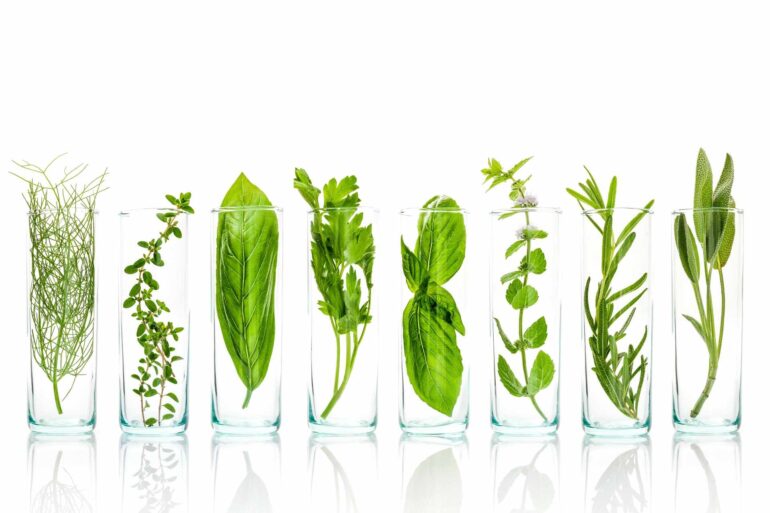
10 Ayurvedic plants: properties, uses and benefits
Ayurvedic plants: a natural heritage of tradition and well-being
From ashwagandha to turmeric, from tulsi to brahmi, a journey to discover ten Ayurvedic plants, their properties, traditional uses, and ancient wellness rituals in Indian medicine.
For millennia, Indian tradition has recognised plants as a valuable resource for caring for the body and mind. Roots, leaves, flowers, fruits, and spices are the ingredients of preparations, treatments and rituals passed down from generation to generation, an expression of knowledge rooted in the Indian discipline of Ayurveda, one of the oldest systems of traditional medicine in the world. At the heart of this practical and philosophical approach lies a holistic concept of well-being, according to which health depends not only on physical conditions but also on the balance between the mind, daily habits, diet and the surrounding environment.
Ayurvedic plants play a central role in this world of knowledge. Some, such as turmeric, ginger and cardamom, are now familiar ingredients in Western cuisine too, appreciated for their aromas and nutritional characteristics. Others, such as ashwagandha, brahmi and shatavari, are less well known but boast a long history of use in the traditional practices of the Indian subcontinent. The parts of the plants used can vary considerably: roots and rhizomes, such as those of ashwagandha and turmeric; leaves, such as those of tulsi and Centella asiatica; fruits, such as amla; or aromatic seeds, such as those of cardamom. Each plant is distinguished by its botanical characteristics, the natural substances it contains, and its methods of consumption, which can range from hot infusions to cold herbal teas, as well as from herbal blends to oils used in massages such as Shirodhara.
In Ayurvedic tradition, the value of these plant species is not exclusively linked to their individual properties, but also to the way they are integrated into everyday life. The choice of ingredients, the preparation of remedies, and rituals dedicated to the body reflect not only the individual’s needs but also the particular attention paid to the rhythms and cycles of the natural world. The result is a cultural heritage that continues to attract interest in the West, where curiosity about wellness practices of Eastern origin is growing.
Ayurvedic plants: what they are and what role they play in Ayurveda
To understand the value of Ayurvedic plants, it is necessary to start with the principles of Ayurveda, a system of traditional medicine that originated in India more than two thousand years ago, whose name derives from the Sanskrit terms ayus, meaning “life”, and veda, meaning “knowledge”. Rather than focusing on individual ailments, this discipline considers the person as a whole, attaching great importance to the relationship between physical conditions, mental well-being, diet, daily habits and the environment.
One of the fundamental concepts of this discipline is that of the three doshas, Vata, Pitta and Kapha, principles that, according to local tradition, describe different constitutional and functional characteristics of the individual. Vata is associated with movement and the elements of air and space; Pitta with heat and transformation, particularly in relation to fire; Kapha with stability and structure, in connection with water and earth. Each person is considered to possess a specific combination of these three principles and, in the Ayurvedic view, their balance represents a central element of well-being.
It is precisely within this concept that plants assume a particularly significant role. Ayurvedic tradition classifies them not only according to their botanical species but also according to characteristics such as rasa, meaning taste, virya, associated with their warming or cooling nature, and vipaka, which describes the effects attributed to them after digestion. These are categories specific to Ayurveda, different from the criteria of modern pharmacology, but fundamental to understanding the significance of traditional preparations.
Plants such as ashwagandha and amla, for example, are often used in preparations known as rasayana, associated in Ayurvedic culture with vitality and the maintenance of balance throughout life, although the benefits attributed to them by tradition are not necessarily confirmed by clinical studies. Others are studied for the presence of antioxidant compounds and other bioactive substances, although “natural” does not automatically mean safe or therapeutically effective: the effects depend on the preparation, concentration and individual conditions, while supplements may have contraindications and drug interactions, which is why it is always advisable to seek guidance from qualified professionals.
The 10 best-known Ayurvedic plants: properties, benefits and uses
From roots used in tonic preparations to aromatic leaves used for infusions, the world of Ayurvedic plants encompasses a wide variety of species, each with different botanical characteristics, active substances and traditional uses. The choice of one plant rather than another depends primarily on the patient’s individual constitution, their needs and the balance they wish to achieve. However, it is important to distinguish the properties attributed to plants by tradition from the benefits actually documented by scientific research, especially when discussing concentrated extracts and supplements.
Among the numerous species used in Ayurvedic culture, ten are particularly representative thanks to their history, widespread use, and variety of applications.
1. Ashwagandha: vitality, stress and rest
Ashwagandha (Withania somnifera), also known as Indian ginseng, is a small shrub native to certain regions of Asia and Africa, characterised by oval leaves, greenish flowers and reddish-orange berries. The part most commonly used in Ayurvedic tradition is the root, from which powders and extracts containing bioactive compounds called withanolides are obtained.
Considered one of the main rasayana plants, ashwagandha is traditionally associated with vitality and the ability to cope with periods of increased fatigue. In Ayurveda, it is used in preparations intended to support physical and mental balance, especially when fatigue and tension accompany particularly demanding daily routines. For this reason, it is one of the plants that attract the greatest interest among people wishing to explore strategies for managing stress and improving the quality of their rest. Some clinical studies on specific extracts suggest possible benefits for perceived stress and sleep, but the results are not yet sufficient to consider it an established treatment.
Ashwagandha is marketed primarily in capsules, extracts and powders. However, its consumption is not suitable for everyone: it is not recommended during pregnancy and breastfeeding, may interfere with certain medications, and requires particular caution in the presence of thyroid, autoimmune or liver disorders.
2. Tulsi: balance and respiratory well-being
Also known as “holy basil”, tulsi is an aromatic plant belonging to the Lamiaceae family. Native to tropical Asia, it has green or purplish leaves, small flowers grouped in inflorescences and an intense fragrance with recognisable spicy and slightly balsamic notes. Traditionally grown in home gardens and used primarily to prepare infusions, decoctions and aromatic blends, holy basil occupies a special place in Indian culture, both for its spiritual significance and for the daily use of its leaves, which are particularly rich in essential oils and phenolic compounds studied for their biological activities.
In Ayurveda, it is generally associated with the ability to promote balance between mind and body and appears in preparations traditionally intended to support respiratory comfort. Its distinctive aroma makes it particularly appreciated in hot drinks, especially during the colder months.
3. Neem: skincare and personal hygiene
Neem (Azadirachta indica) is an evergreen tree belonging to the Meliaceae family and native to the Indian subcontinent, capable of reaching considerable dimensions (some specimens exceed 10 metres in height) and recognisable by its dense canopy, compound leaves and small oval fruits.
Leaves, bark and seeds can be used in different preparations, including extracts and decoctions, while a valuable oil is obtained from the seeds, characterised by an intense fragrance and the presence of numerous plant compounds, which make it suitable for both skincare and scalp cleansing. It is no coincidence that it often appears among the ingredients of soaps, cleansers, shampoos and cosmetic products intended for blemish-prone skin.
Some components of neem have also demonstrated good antimicrobial activity in laboratory studies, but these results do not automatically demonstrate clinical efficacy against acne, infections, or other dermatological conditions. It is also essential to distinguish cosmetic use from ingestion: neem oil can be highly toxic if taken orally and must not be used as a home remedy.
4. Turmeric: antioxidant and digestive properties
Turmeric (Curcuma longa) is a tropical herbaceous plant belonging to the Zingiberaceae family, cultivated primarily for its underground rhizome, which has yellow-orange flesh. Once dried and ground, the rhizome becomes the golden spice that characterises numerous preparations in Indian cuisine. Its intense colour comes from curcuminoids, a group of substances among which curcumin stands out, having been extensively studied for its antioxidant and anti-inflammatory activities.
In Ayurvedic tradition, turmeric is used in food preparations associated with digestive well-being and in certain rituals dedicated to skincare. Its versatility makes it one of the plants most easily incorporated into everyday cooking, where it helps enrich vegetable dishes, rice, soups, and spiced drinks. However, it should be remembered that the culinary use of turmeric differs from taking highly concentrated supplements, some of which have been associated with adverse effects, including effects on the liver, and that its benefits are enhanced by consuming it together with foods rich in piperine, such as black pepper, which increases its bioavailability and, consequently, its absorption.
5. Amla: vitamin C, antioxidants and hair care
Amla (Phyllanthus emblica), also known as Indian gooseberry, is the fruit of a tree native to southern Asia. Small, rounded and yellowish-green in colour, it has flesh with a distinctly sour and slightly astringent flavour. One of its distinctive characteristics is its high content of vitamin C and polyphenols, substances that contribute to the fruit’s nutritional characteristics and antioxidant activity.
In Ayurveda, amla is also considered a rasayana plant and is traditionally associated with vitality and the maintenance of balance within the body. It is also one of the three ingredients of triphala, a blend of fruits that is well known in local tradition. It is consumed fresh, dried, preserved, and in certain food preparations. The effects attributed to concentrated extracts, on the other hand, cannot be equated with the nutritional benefits of the fruit and require further scientific confirmation. Amla is also used in cosmetics, particularly in oils and preparations for hair care.
6. Brahmi: memory, attention and concentration
Brahmi (Bacopa monnieri) is a small perennial herbaceous plant that grows predominantly in wet and marshy areas, particularly in tropical and subtropical regions. It has slender stems, fleshy leaves, and small flowers that are generally white or purplish.
The aerial parts of the plant contain compounds called bacosides, which have been studied for years for their possible effects on cognitive functions. In Ayurveda too, brahmi is traditionally associated with memory, learning, and mental clarity and appears in preparations historically intended to support intellectual activities and concentration. For this reason, it is a plant of particular interest to those facing periods of study or work that require sustained attention.
Brahmi is used primarily in the form of extracts and powders. Before taking it, it is advisable to check for possible interactions and contraindications, as well as the botanical identity of the product, since the common name may also be used for other plants.
7. Ginger: digestion, nausea and gastrointestinal comfort
Ginger (Zingiber officinale) is a tropical herbaceous plant characterised by long stems, lance-shaped leaves and a fleshy rhizome with an intense fragrance and pungent flavour. Native to Asia, it is now cultivated in numerous regions of the world and represents a fundamental ingredient in many culinary traditions, including those of the Western world. Its aromatic qualities derive primarily from compounds such as gingerols and shogaols, present in different proportions in fresh and dried ginger.
In Ayurveda, it is considered a warming spice and is traditionally associated with digestive well-being. It can be used in infusions, decoctions and food preparations, either alone or together with other spices. Among the best-known Ayurvedic plants, ginger is also one of those for which relatively stronger clinical evidence exists in relation to the treatment of various forms of nausea. In particular, it has been studied for nausea during pregnancy, although any use of supplements during this period must be agreed upon with a healthcare professional. Culinary quantities are generally well tolerated, while more concentrated preparations could cause gastrointestinal discomfort or interact with certain medications.
8. Shatavari: the plant of Ayurvedic tradition for women
Shatavari (Asparagus racemosus) is a climbing plant belonging to the Asparagaceae family, widespread mainly in India and other regions of southern Asia. It is characterised by slender branches, small, pale flowers, and a root system consisting of numerous tuberous roots. It is precisely these roots that are used in Ayurvedic preparations, generally after being dried and ground into powder.
In Indian tradition, shatavari is associated with women’s well-being and appears in preparations historically used during the different stages of a woman’s life. It is also classified among the rasayana plants, traditionally associated with vitality and the maintenance of balance. The roots contain steroidal saponins and other bioactive substances that have attracted research interest. However, clinical evidence remains limited and does not make it possible to confirm with certainty its effects on fertility, hormonal balance or menopause-related disorders.
9. Gotu kola: skin well-being and concentration
Commonly known as Centella asiatica, gotu kola is a small perennial herbaceous plant with rounded leaves supported by long petioles, and generally grows in humid, tropical environments. It has been used for centuries in various Asian traditions, both as a food ingredient and in preparations dedicated to body care.
Centella contains triterpenoid compounds, including asiaticoside and madecassoside, studied primarily for their role in various biological processes of the skin, which is why it is a very popular ingredient in creams, serums, and cosmetic products. In Ayurveda, gotu kola is also traditionally associated with concentration and mental well-being. However, extracts taken orally require greater caution, partly because of possible adverse effects and drug interactions.
10. Cardamom: cooking and digestion
Last but not least is cardamom (Elettaria cardamomum), also a perennial herbaceous plant belonging to the Zingiberaceae family, native to southern India. This plant produces green pods containing small dark seeds, characterised by an intense, fresh and slightly balsamic aroma, often used to flavour sweet and savoury dishes, hot drinks and aromatic blends.
It is one of the most recognisable ingredients of masala chai, the Indian spiced tea prepared with a varying combination of spices. In Ayurvedic tradition, it is also associated with promoting digestive well-being.
Forte Village’s Ayurvedic – Yoga Park: the power of ancient Indian traditions in the heart of Sardinia
The connection between plants, physical and mental balance and self-care, central to Ayurvedic philosophy, also finds expression in the wellness treatments and rituals offered by Forte Village’s Ayurvedic Park, a space immersed in the tranquillity of the Mediterranean gardens of the resort in Santa Margherita di Pula, in the heart of southern Sardinia. Part of the wellness offering at Acquaforte Thalasso & Spa, the park is designed as an intimate setting in which to explore the practices of Eastern tradition through personalised treatments, yoga and meditation.
The Ayurvedic experiences are led by Master Raj Eka Thapaliya, a professional with more than twenty years of experience and training acquired in Nepal and India. His approach emphasises listening to the individual and integrating different traditional techniques, starting with an Ayurvedic consultation dedicated to individual needs.
Among the treatments offered, some directly reflect the importance of plant substances in Ayurveda. Abhyanga is a full-body massage performed with a blend of warm oils, using movements designed to encourage relaxation and promote a pleasant feeling of ease. Pindasweda, on the other hand, involves applying small, warm silk or cotton pouches containing herbs to the skin, combining heat with manual massage techniques in a particularly relaxing and enveloping ritual.
Another distinctive experience is Shirodara, a treatment during which a continuous stream of warm oil is gently poured onto the forehead, in the area between the eyebrows, in combination with traditional Ayurvedic massage. These are complemented by Marmabhyangam, which focuses on the marma points identified by Indian tradition, and the ForteVeda Ritual, a personalised programme combining different Ayurvedic techniques, specifically designed for Acquaforte Thalasso & Spa.
From the properties of Ayurvedic plants to the rituals that traditionally enhance their use, a philosophy emerges in which well-being arises from the harmony between gestures, sensations and the environment. For further information about the treatments offered by Master Raj Eka Thapliya, call +39 0709218818 or send an email to holiday@fortevillage.com.
Would you like to discover the secrets of Ayurvedic plants and enjoy a dream holiday in a true paradise? Discover Forte Village Resort in Sardinia