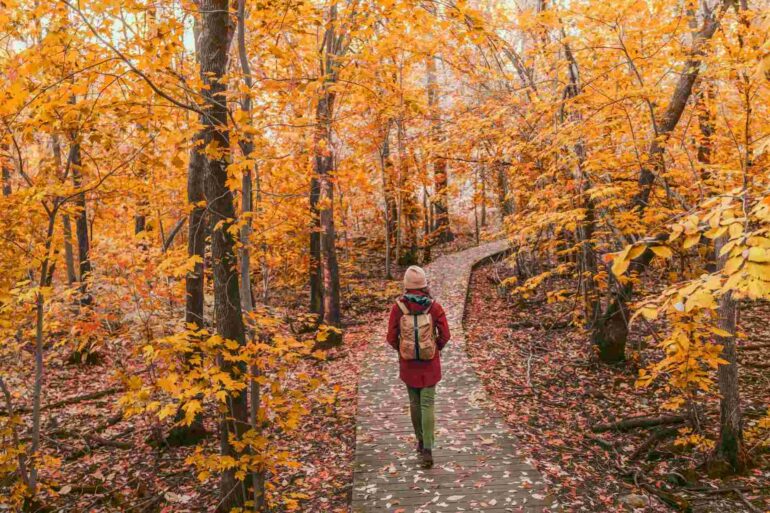
Fall foliage in Sardinia: where to admire the most beautiful fall colors
Fall foliage in Sardinia: the most beautiful places to admire the magic of fall
From the mountains to the forests, passing through valleys and inland landscapes, Sardinia offers surprising views during the fall season. Here are the most evocative places to admire fall foliage in Sardinia and immerse yourself in the colors of the season.
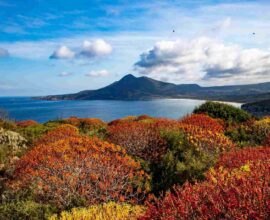
When summer slowly gives way to the mild October days, Sardinia prepares to change its appearance, taking on the colors of fall. The inland areas move away from the rhythms of the beach season and invite visitors to discover quieter landscapes, trails immersed in forests, small mountain villages and areas where nature takes on new shades. It is during this period that foliage becomes an opportunity to explore the island from a different perspective, following the gradual transformation of the leaves from green to shades of yellow, gold, orange and red.
The phenomenon mainly affects mountainous and inland areas, where the presence of chestnut trees, downy oaks, oaks, and other deciduous species makes the Sardinian landscape particularly evocative during fall. Among the most interesting places to admire the fall foliage are therefore Barbagia and Gennargentu, with the forests surrounding Aritzo, Belvì and Desulo, as well as Marghine with the Badde Salighes park and some areas of Montiferru and the north of the island.
When and where to admire the fall foliage in Sardinia
The best time to admire the foliage in Sardinia may vary depending on altitude, the exposure of the forests, and the weather conditions of the year. In general, the first transformations of the landscape begin between the end of September and October in the highest areas, while many inland areas reach the most interesting moment for observing the different shades of the leaves between the second half of October and the first weeks of November.
Below are the best places to fully enjoy this celebration of colors, sounds and scents.
Barbagia, among chestnut groves and mountain villages
Located in the heart of Sardinia, in the province of Nuoro, Barbagia offers some of the island’s most evocative landscapes in fall. The forests around Aritzo, Belvì and Desulo offer some of the most evocative scenery, thanks to the presence of chestnut trees, hazelnut trees and other deciduous species that during this season shift from the classic deep green to endless shades of yellow, ochre, orange and red. In this setting, a walk in nature can also become a valuable opportunity to discover the history and traditional practices of some of the island’s oldest and most characteristic mountain towns.
Gennargentu: fall foliage among mountains and forests
Gennargentu, the main mountain massif located in the central-eastern part of the island, represents one of the most interesting areas for those looking for wilder landscapes, where nature is still the main protagonist. The richness of the vegetation varies according to altitude and includes holm oaks, downy oaks, chestnut trees and other tree species, together with forest formations that are particularly significant from a naturalistic point of view.
During the fall season, some of the forests and valleys of the massif take on warmer colors, creating an interesting contrast with the profile of the mountains. The areas around the villages of Fonni, Desulo, Tonara and Aritzo make it possible to combine the experience of foliage with that of a journey through the Sardinian inland, among mountain landscapes, local traditions and seasonal products. The spectacle of the leaves changing colour here is not merely a matter of colour: above all, it is a way of observing the more mountainous character of the island, far from the exclusively Mediterranean image associated with Sardinia.
Badde Salighes: a park in fall colors
Located in the territory of Bolotana, in Marghine (we are in the central-western part of the island), the Badde Salighes Park presents itself as another particularly evocative destination to explore during the fall season. The park, connected to the historic Villa Piercy, is crossed by several trails that allow visitors to immerse themselves in an environment rich in trees and vegetation.
One of the area’s most popular itineraries passes through the Badde Salighes chestnut grove and continues towards Nidu ‘e Corbu and Punta Palai. The route allows visitors to observe the landscape as it changes colour, crossing vegetation in which chestnut trees, oaks and holm oaks help create a palette of warm and comforting shades.
Montiferru: forests, trails, and inland landscapes
Remaining in the western part of Sardinia, we also find Montiferru. The massif, characterised by reliefs of volcanic origin, includes numerous wooded areas where oaks, holm oaks, downy oaks and other deciduous tree species grow, creating particularly varied vegetation compared to the surrounding coastal areas and introducing warmer shades into the landscape during the fall months.
The area offers several possibilities for those wishing to explore the foliage through walks and excursions. The areas around Santu Lussurgiu, Cuglieri, Seneghe and Scano di Montiferro feature various rural roads and trails that cross forests and hills, alternating stretches immersed in vegetation with panoramic viewpoints over the inland area. The woodland landscape also blends with the presence of small towns and rural areas, where it is still possible to encounter activities connected to agriculture and local production. Fall is, in fact, an interesting time also from a gastronomic point of view, with seasonal products becoming part of traditional cuisine and the activities of the local communities.
The Montes forest and the Great Holm Oak forest of Sas Baddes
Among the mountains of the Supramonte of Orgosolo, in central-eastern Sardinia, stretches the Montes Forest, one of the most important wooded areas on the island. Covering an area of approximately 4,500 hectares, at elevations reaching one thousand metres, lies Sas Baddes, a vast centuries-old holm oak forest covering approximately one thousand hectares. Here, holm oaks grow alongside maples, holly trees, strawberry trees, phillyreas and yews, giving rise to a forest environment that is particularly rich from a botanical point of view. The presence of evergreen species makes the foliage in this area different from that of forests composed mainly of deciduous trees. The green of the holm oak forest remains present even during the cold season, while the other species progressively change the colour of their leaves.
The Montes Forest also offers several itineraries for those wishing to explore the area on foot. From the Montes Forest station, in the Funtana Bona area, it is possible to reach Sas Baddes or follow the route towards Monte Novo San Giovanni, passing by the Funtana Bona spring, where the Cedrino River originates. The itinerary leads to the natural monument of Monte Novo San Giovanni, at an altitude of approximately 1,300 metres, and allows visitors to cross a significant part of the Supramonte’s forest landscape. There are also several loop trails in the area around the forest station, allowing visitors to walk inside the holm oak forest while observing the surrounding vegetation and reliefs. In addition to its naturalistic interest, the forest also preserves interesting historical and anthropological evidence, including pinnettos, nuraghi and ancient pastoral settlements.
A different Sardinia to discover in fall at Forte Village Resort
Foliage reveals a lesser-known side of the island, especially compared to that of its beaches and summer sea. It is the Sardinia of forests, mountains, and small inland villages, where the changing season slowly transforms the landscape and invites visitors to travel without haste.
At the same time, a journey in search of fall colors can also become a journey through the island’s gastronomy. In the mountain areas, in fact, the season brings with it ingredients and products closely linked to the forests and the life of inland communities: chestnuts, mushrooms, cheeses, cured meats, different types of traditional bread and other specialities prepared according to recipes passed down over time. It is a way of experiencing the area through all the senses, moving from the landscape to the table and rediscovering the connection between the environment, culture and local production.
Immersed in the Mediterranean maquis of Santa Margherita di Pula, less than an hour’s drive from Cagliari and just a few steps from some of the most beautiful beaches on the island, Forte Village Resort represents a starting point for discovering the area and experiencing Sardinia even beyond the summer season. In addition to its strategic location, this renowned five-star property also offers a package designed specifically to fully experience the fall foliage period. Valid from 1 October to 2 November, “October in Sardinia” includes a 10% discount on the room rate, half-board treatment with breakfast and dinner, with accommodation included for children up to 16 years old sharing a room with adults, transfers to and from Cagliari airport and, last but not least, one Academy included for every child.
Among the sports academies included in the offer are those dedicated to tennis, padel, swimming, pickleball, go-karting, and basketball. Also not to be missed are the discounts on the fall courses of the Real Madrid Foundation Clinic, scheduled from 25 October to 1 November, and on the lessons of the Coastal Rowing and Mountain Bike Academies.
For further information about the “October in Sardinia” package or to book a lesson at one of the Academies, you can call +39 070 9218818 or send an email to holiday@fortevillage.com.
Would you like to admire the fall foliage and enjoy a dream holiday in a true paradise? Discover the Forte Village Resort in Sardinia