Facial radiofrequency: what it is and its benefits for the skin
Facial radiofrequency: how it works and why to do it
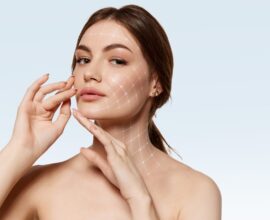
Facial radiofrequency is a non-invasive aesthetic medicine treatment that can improve skin brightness and tone, reducing the appearance of wrinkles and fine lines without the use of needles or scalpels.
In recent years, facial radiofrequency has established itself as one of the most appreciated non-invasive aesthetic medicine treatments for those who wish to prevent and minimize the signs of aging without resorting to surgery.
Skin aging is a physiological phenomenon involving various factors. Over the years, in fact, the production of collagen and elastin, two proteins that provide structure and firmness to the skin, progressively decreases, while the action of UV rays, pollution, stress, and lifestyle habits can accelerate the appearance of wrinkles, loss of elasticity, and tissue sagging.
Radiofrequency targets specific biological mechanisms, using controlled heat to reactivate cellular activity and promote skin renewal by stimulating the skin’s natural regenerative processes. The result is visibly more toned, radiant, even, and youthful-looking facial skin, achieved without incisions, anesthesia, or lengthy recovery times.
What is facial radiofrequency, and what does the treatment consist of?
Facial radiofrequency is an aesthetic treatment that uses high-frequency electromagnetic waves to generate heat in the deeper layers of the skin. This controlled heating primarily affects the dermis, which is the cutaneous layer where the collagen and elastin fibers responsible for supporting the skin are located. Unlike other more invasive procedures, the energy is delivered deep down in a selective manner, allowing the tissue to be stimulated without causing damage to the epidermis.
From a biological standpoint, the heat induces a dual response. On the one hand, it causes an immediate contraction of the collagen fibers already present in the skin tissues, generating an initial lifting effect. On the other hand, it activates fibroblasts—the cells responsible for synthesizing new collagen, elastin, and hyaluronic acid—promoting a progressive improvement in skin quality.
For this reason, radiofrequency is often described as a form of deep biostimulation treatment, capable of leveraging the body’s natural repair and regeneration mechanisms to improve skin function and appearance.
How does the treatment work?
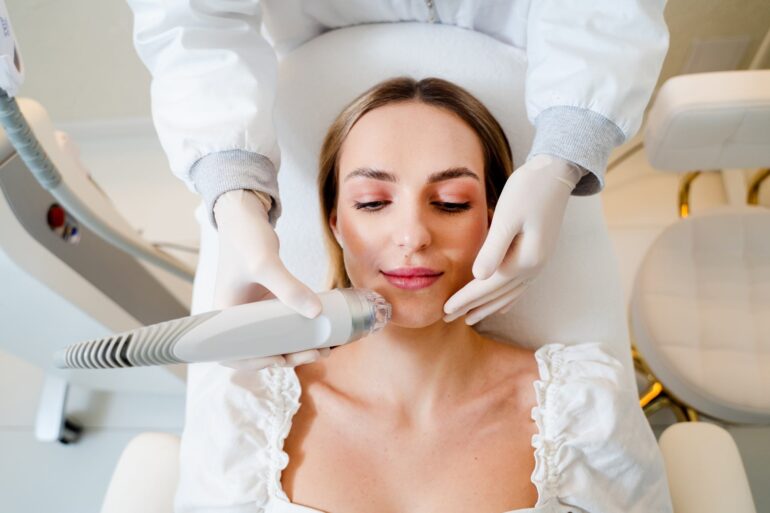
During the session, the physician or specialized operator glides a dedicated handpiece over the surface of the face. The device is designed to distribute energy uniformly and selectively reach the dermis, the layer of the skin where collagen and elastin fibers reside. To facilitate the treatment, a conductive gel is generally applied, which improves contact between the handpiece and the skin, promoting optimal energy transmission.
The objective is to bring the dermis to a controlled temperature, generally between 40°C and 45°C, considered ideal for stimulating skin regeneration processes without damaging the epidermis. This thermal increase triggers a natural biological response: existing collagen fibers contract immediately, producing an initial tightening effect, while fibroblasts are activated to produce new collagen, elastin, and other fundamental components of the extracellular matrix.
The process of neocollagenesis (i.e., the formation of new collagen fibers) continues in the weeks and months following the treatment. For this reason, the results of radiofrequency are not only immediate but tend to improve progressively over time, with the skin appearing increasingly firmer, more elastic, and more toned.
During the procedure, the patient experiences a gradual and uniform sensation of heat that is constantly monitored by the operator. The most advanced devices are equipped with temperature monitoring and surface cooling systems that ensure safety and comfort throughout the entire session. In most cases, no anesthesia is required, and the treatment is painless.
What happens after the treatment?
One of the primary advantages of facial radiofrequency is the absence of downtime. Because the treatment does not cause lesions or abrasions to the skin surface, in most cases, it is possible to immediately resume normal daily activities.
Immediately after the session, however, it is normal to observe mild skin redness and a sensation of warmth in the treated area. These effects are temporary and represent a normal physiological response to increased microcirculation and tissue stimulation. They generally disappear spontaneously within a few hours, though they may persist for up to 24 hours in particularly sensitive skin types.
To support skin comfort after the treatment, it is advisable to apply moisturizing and soothing creams formulated with calming ingredients, such as aloe vera, panthenol, hyaluronic acid, or emollient plant extracts, and to always protect the skin with a broad-spectrum sunscreen. Additionally, it is best to avoid potentially irritating cosmetic products, such as chemical exfoliants, peelings, scrubs, retinoids, or products with a high concentration of acids, for the following 24 to 48 hours.
How long does a session last?
The duration of the treatment varies based on the size of the area to be treated and the patient’s aesthetic goals. Generally, a facial radiofrequency session takes between 30 and 60 minutes.
To achieve optimal results, the doctor may recommend a personalized protocol consisting of multiple sessions distributed over a few weeks. The number of treatments depends on several factors, including the patient’s age, the degree of skin laxity, and individual skin characteristics.
When do you see the results of radiofrequency?
The results of radiofrequency develop progressively. Immediately after the session, a slight tightening effect can be observed due to the instant contraction of collagen fibers. However, the most significant changes manifest in the following weeks, when fibroblasts begin to produce new supporting fibers. Generally, the improvement continues for several months after the treatment cycle, rendering the final result particularly natural and harmonious.
The longevity of the effects depends on individual factors such as age, lifestyle, sun exposure, and skin quality, but it can be prolonged through periodic maintenance sessions.
The main benefits of facial radiofrequency
Radiofrequency offers numerous aesthetic advantages that make it one of the most requested procedures in non-surgical rejuvenation. Here are some of the main effects of the treatment.
Stimulates collagen and elastin production
Collagen accounts for approximately 70-80% of the dermis structure and plays a fundamental role in ensuring tissue resistance, firmness, and support. With advancing age, the synthesis of this protein progressively declines, while existing fibers undergo fragmentation and degradation processes caused by both chronological aging and external factors such as sun exposure, pollution, and oxidative stress.
The thermal energy generated by radiofrequency induces a mild and controlled denaturation of existing collagen fibers, activating a cascade of biological signals that stimulates fibroblasts to produce new type I and III collagen. In parallel, the synthesis of elastin—a protein essential for the skin’s ability to return to its original shape after being subjected to tension—is also favored.
This dermal remodeling process continues for weeks or months after the treatment, helping to progressively improve skin quality and structure.
Improves skin tone and firmness
The firming effect of radiofrequency is the result of two complementary mechanisms. On one hand, the heat causes an immediate contraction of pre-existing collagen fibers, leading to an initial tightening effect visible within the hours following the session. On the other hand, the production of new collagen progressively increases the density and consistency of the dermis.
From a physiological perspective, greater dermal density translates into an enhanced ability of the skin to counteract gravity and the tissue-sagging processes that characterize skin aging.
The improvement in tone is particularly evident in facial areas most subject to laxity, such as the lower third of the face, the mandibular region, the cheeks, and the neck. The skin appears progressively firmer, more elastic, and better supported, resulting in a naturally younger and more rested appearance.
Reduces wrinkles and fine lines
Wrinkles are a clinical manifestation of the progressive alteration of the dermal structure. The decline in collagen, loss of elasticity, and slowing of cell turnover processes contribute to the formation of increasingly evident skin folds and depressions.
Although radiofrequency is not designed to eliminate deep wrinkles, it serves as a valuable tool for slowing the evolution of aging signs and improving overall skin quality. Fine lines and expression lines can appear progressively softened thanks to increased dermal thickness and improved skin elasticity. Furthermore, the skin surface tends to become more uniform and smooth, contributing to an overall fresher and more relaxed appearance.
Redefines the facial oval
Over the years, the loss of collagen, the relaxation of supporting structures, and the redistribution of fat compartments contribute to progressively altering the harmony of the facial oval. The jawline tends to become less defined, and signs of sagging may appear in the lower part of the face.
Radiofrequency works by improving tissue firmness and promoting the remodeling of deep dermal structures. This effect can help render the mandibular contour more defined and counteract the early signs of skin laxity, all without altering the patient’s individual features.
Imparts radiance and uniformity to the complexion
In addition to structural effects, radiofrequency produces significant benefits for the surface quality of the skin. The controlled increase in temperature stimulates local blood microcirculation and promotes better tissue oxygenation. This increased supply of nutrients and oxygen helps support cellular metabolism and optimize skin repair and renewal processes.
Many patients also report an improvement in skin texture, with less visible pores, a smoother surface, and a general sensation of greater softness and skin quality. The complexion appears more homogeneous and fresh, helping to enhance the overall appearance of the face.
Furthermore, the treatment can also be used preventively to preserve skin firmness and quality for longer.
More radiant and toned skin with radiofrequency and other aesthetic medicine treatments at Forte Village Resort
Taking care of one’s skin means preserving not only its aesthetic appearance but also its quality, elasticity, and functionality over time. From this philosophy stem the aesthetic medicine treatments at Forte Village Resort, designed to respond to the specific needs of each patient through innovative technologies, personalized protocols, and an approach oriented toward the global well-being of the individual.
The Facial Radiofrequency Pure+ treatment, a non-invasive facial regeneration procedure utilizing exodermic radiofrequency handpieces, is capable of smoothing and softening fine wrinkles while enhancing facial radiance. The procedure can be performed on its own or incorporated into combined protocols that integrate other targeted skin-rejuvenation treatments. These include biorevitalisation, designed to improve deep hydration and support cellular metabolic activity, medical chemical peelings such as Prx-t33, and Sofwave, which helps redefine facial contours naturally, without a scalpel.
Do you want to discover the benefits of facial radiofrequency and spend a dream vacation in a true paradise? Book your stay at Forte Village Resort in Sardinia